

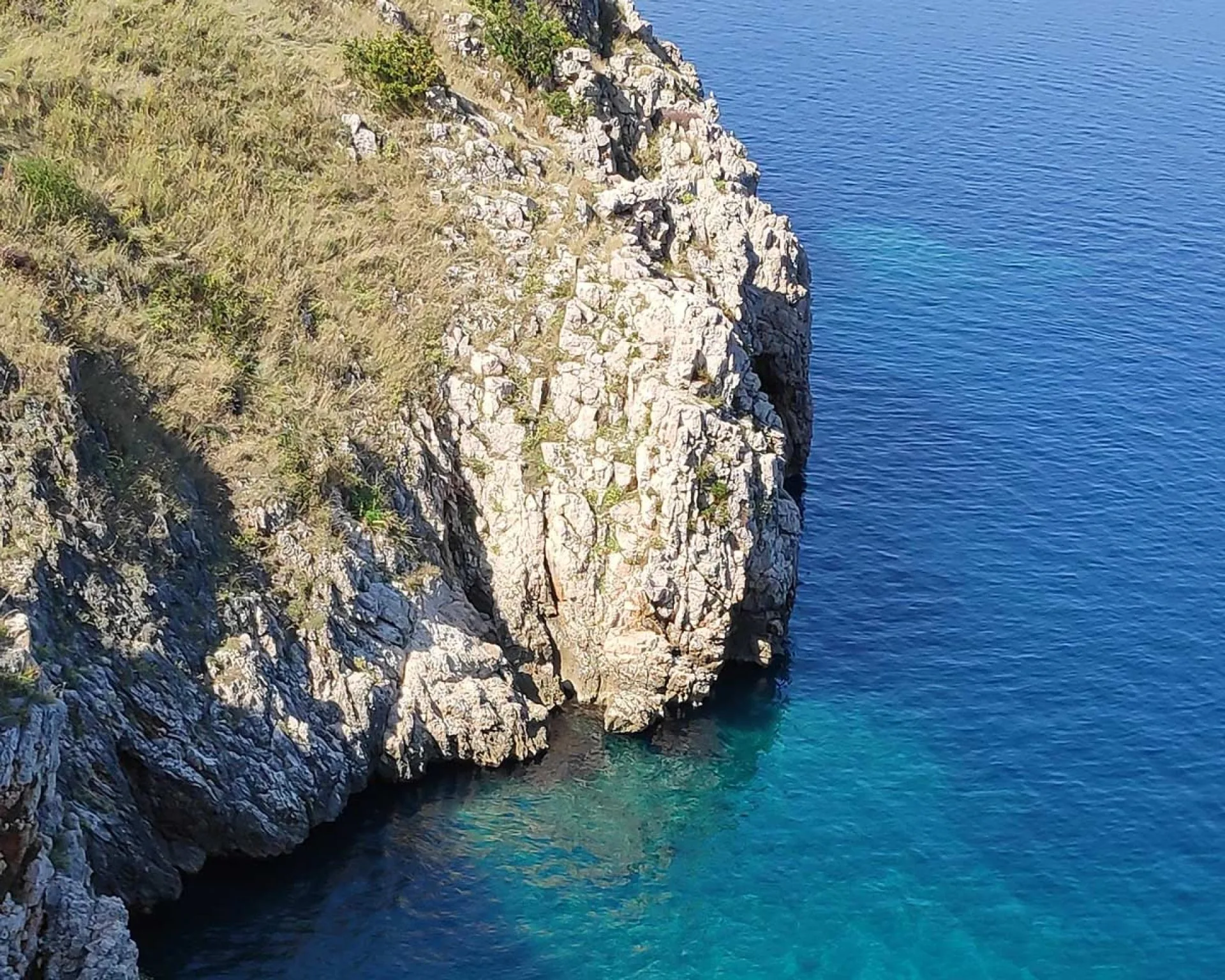
Croatia has 5,835km of coastline, 1,246 islands, and an Adriatic that reaches 24°C in August. It is in the Schengen zone since January 2023 and uses the euro. The bridge to Krk Island is free. The wine in Vrbnik is made from Žlahtina, an indigenous grape grown mainly in the Vrbnik field. Here is the honest case for Croatia.
The Adriatic vs. The Mediterranean
The Adriatic is an enclosed basin between Croatia and Italy, with conditions that are genuinely different from the Ligurian Sea or the waters off the Amalfi Coast. In summer the sea around Krk is usually calm; the strong bura wind blows mostly in winter.
The water is clean. Several Krk beaches have been awarded the Blue Flag, among them Baška’s Vela plaža and Pećine at Šilo. Jellyfish have rarely been reported around Krk in recent summers. This is not a minor detail for anyone who has had a holiday interrupted by a jellyfish bloom.
The visibility underwater is exceptional — 10–15 metres on a still day. The sea floor is visible at 4 metres. This is the quality of water that makes the aerial photographs look implausible until you are in it.
Krk Island — The Accessible Choice
Krk shares the title of Croatia’s largest island with Cres (both about 406 km²), and it is one of the easiest to reach. The Krk Bridge — 1,430 metres long, free since 2020 — connects the island to the mainland near Rijeka. You drive across. No ferry queue, no timetable, no car-sea transfer with children in the back seat asking how long it takes.
- From Rijeka Airport: 30 minutes to Vrbnik, 45 minutes to Stara Baška. Rijeka Airport sits on Krk Island itself.
- From Vienna: about 540 km, roughly 5–6 hours by car. Comfortable as a single day’s drive.
- From Munich: about 570 km by road. A motorway drive with one stop.
- From Frankfurt: about 960 km by road. The standard two-day family drive or a single long day.
- From Ljubljana: about 165 km, around 2 hours.
The combination of seasonal flights to Rijeka Airport and the drive-on access via the bridge makes Krk easy to reach for a private villa holiday. There is no logistical complexity between leaving home and arriving at the villa.
What Zala Beach Looks Like
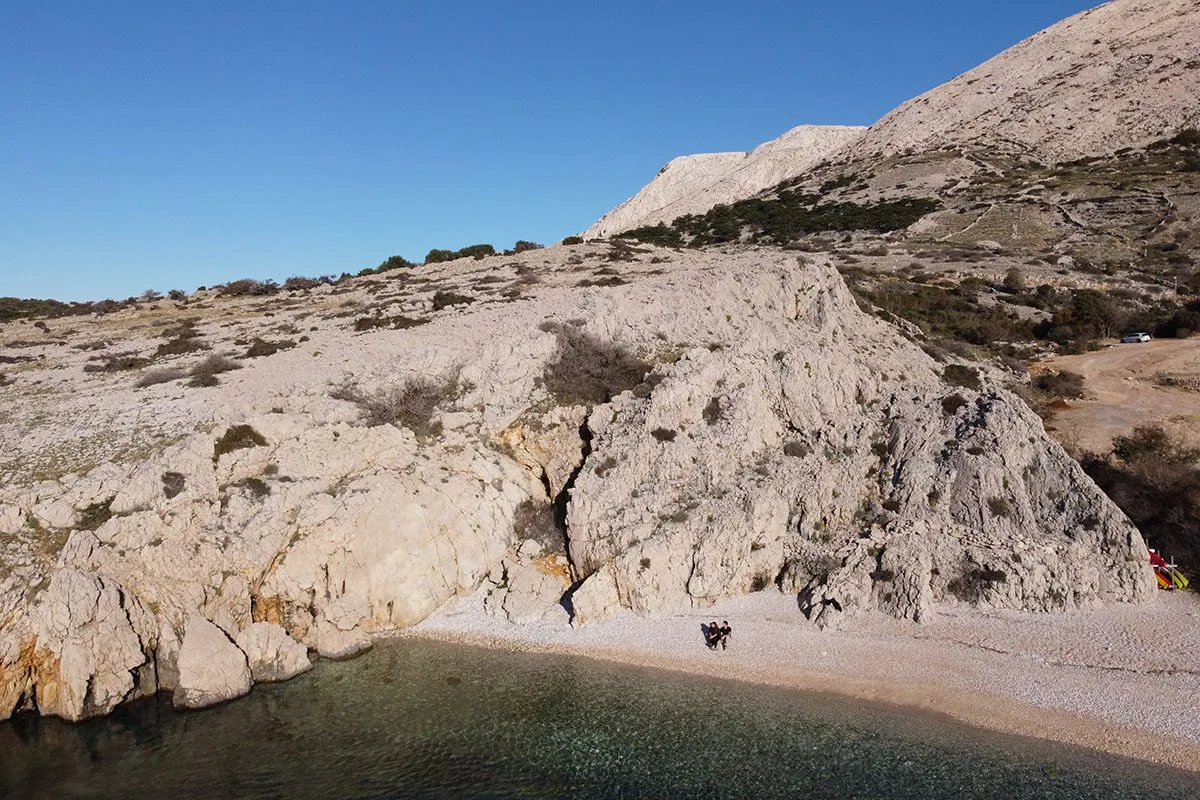
Zala sits in a small bay just south of Stara Baška village. A small pay car park (about €1 an hour) sits just above the beach; you can also walk from the village in 15–20 minutes, or come by boat, about ten minutes from the harbour. White pebbles, and a few metres out the bottom turns to sand. In summer there is a small bar and a few umbrellas to rent, but almost no natural shade, so bring water and swimming shoes. Quiet in May and September; in August, come before 11.
The water is the same colour as the aerial photographs you see labelled "Maldives" or "French Polynesia" in travel content. It is about 45 minutes from Rijeka Airport. From Villa Marim you can walk there in 15–20 minutes, or take a boat from the village harbour in about ten. Read our full guide: Zala Beach and the coves of Stara Baška.
Krk Food and Wine
The food on Krk is shaped by the island — dishes and ingredients that belong to this place.
- Šurlice pasta: Krk’s own hand-rolled pasta, traditionally served with a goulash or lamb sauce; some restaurants, like Nada in Vrbnik, serve it with seafood. Each piece is rolled by hand around a thin wooden rod, creating a hollow spiral shape. You can find it in most good restaurants — do not leave without trying it.
- Krk lamb: grazed on wild herbs across the island's limestone interior. The flavour is recognisably different from mainland lamb — lighter, more fragrant. Slow-cooked, it is one of the best things you can eat in Croatia.
- Peka: slow-cooked octopus or lamb under a heavy iron dome covered with embers. Requires 3–4 hours; you order it the day before at a traditional konoba. When it arrives at the table, you understand why you waited.
- Žlahtina white wine: grown mainly in the Vrbnik field on Krk. Light, fresh and good with seafood. You can buy it across the island, but it tastes best in a Vrbnik cellar, with the people who make it.
See our full guide: Žlahtina and the Wine Cellars of Vrbnik
Why Not Dubrovnik?
Dubrovnik is extraordinary. The walls, the old town, the sea — it deserves everything that has been written about it. It is also one of Croatia’s busiest destinations, in a city of about 42,000 people. The city staggers cruise-ship arrivals to manage the crowds.
That is not a criticism of Dubrovnik. It is simply a different kind of experience from what a private villa on Krk offers. The Kvarner region is genuinely uncrowded by comparison — not because it is less beautiful, but because it lacks the single iconic image that drives Dubrovnik's visitor numbers.
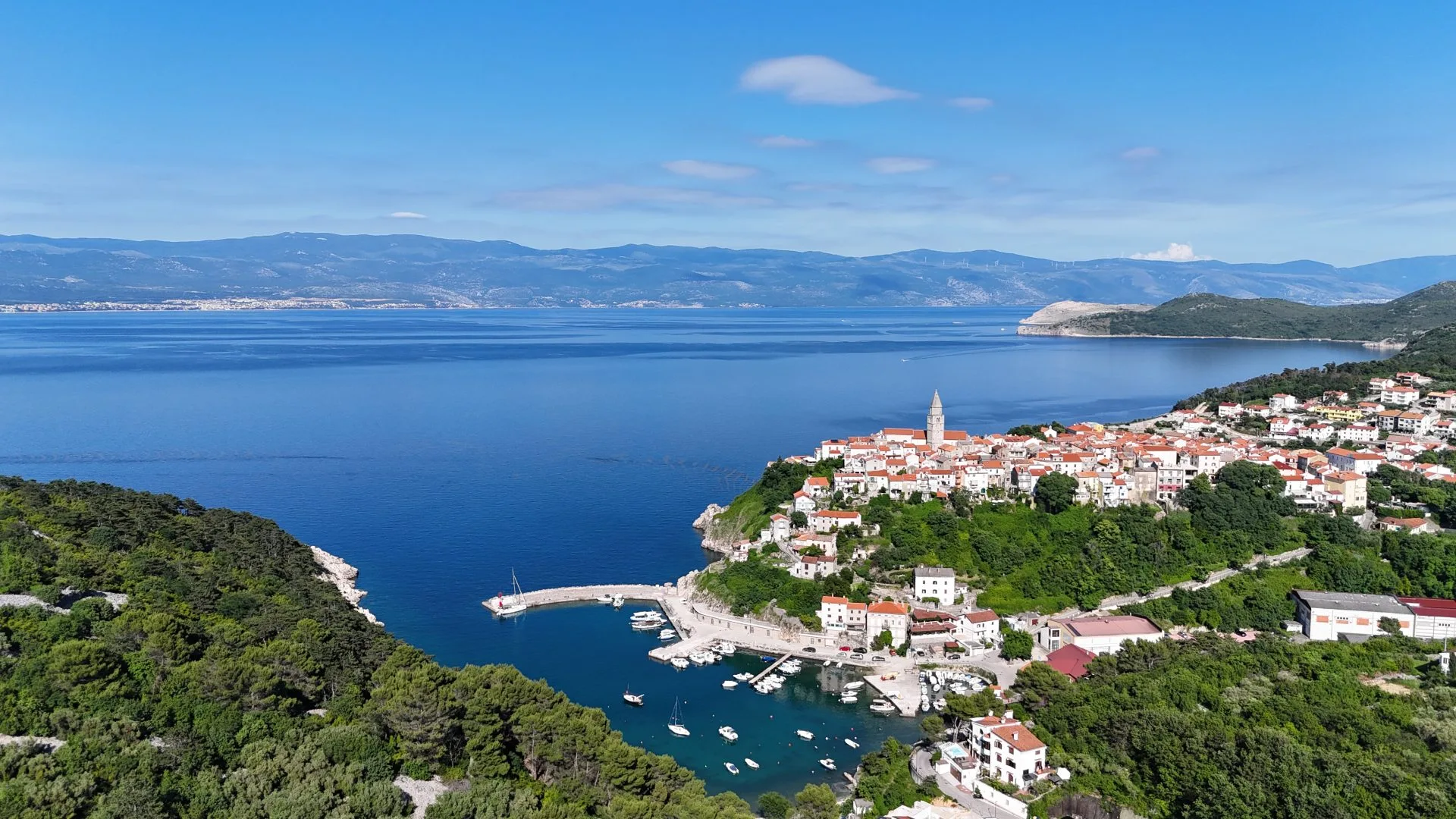
For a private villa experience in Croatia, the northern Adriatic — Istria and Kvarner, with Krk at its centre — is the region that delivers what the south promises.
Practical Information
- Schengen zone: Yes, since 1 January 2023. EU and Schengen citizens enter without border checks.
- Currency: Euro, since 1 January 2023.
- Flights: Rijeka Airport has seasonal direct flights from several European cities; check the airport’s current timetable.
- Language: Croatian; English widely spoken in all tourist areas. Italian is widely understood in Istria.
- Driving: Right-hand traffic. EU driving licence accepted. Croatian motorways charge a distance-based toll (no vignette); on the way, Austria and Slovenia need a vignette.
- Medical: EU citizens: EHIC card accepted. Travel insurance with medical cover recommended for all visitors regardless of origin.
"We had such an amazing time, enjoyed every minute. Through the years we travel a lot around Croatia, but this property is top on the list."
— Miroslav, guest of Marim Luxury Villas

Frequently Asked Questions
When is the best time to visit Croatia?
May, June, and September offer the best combination of warm weather (18–24°C), swimmable sea (18–24°C), and far fewer crowds than July and August. September is a favourite: the sea is still around 23–24°C and the crowds have gone, though some restaurants start closing from mid-September.
How do you get to Krk Island?
Rijeka Airport (on Krk Island itself) is 30 minutes from Vrbnik by car. Zagreb Airport is 2.5 hours. Krk Bridge connects the island to the mainland near Rijeka — no ferry required from the north. EU driving licences are accepted in Croatia.
Is Croatia in the Schengen zone?
Yes. Croatia joined the Schengen Area on 1 January 2023 and adopted the euro simultaneously. EU and Schengen-area citizens can enter without border checks.
What is the weather like in Croatia in summer?
In the Kvarner Bay area (Krk Island), July and August temperatures average 27–30°C during the day. Sea temperature reaches 24°C. Rainfall in summer is rare — typically a brief thunderstorm in August. September: 22–25°C air, 24°C sea. May: 18–22°C air, 18–20°C sea.