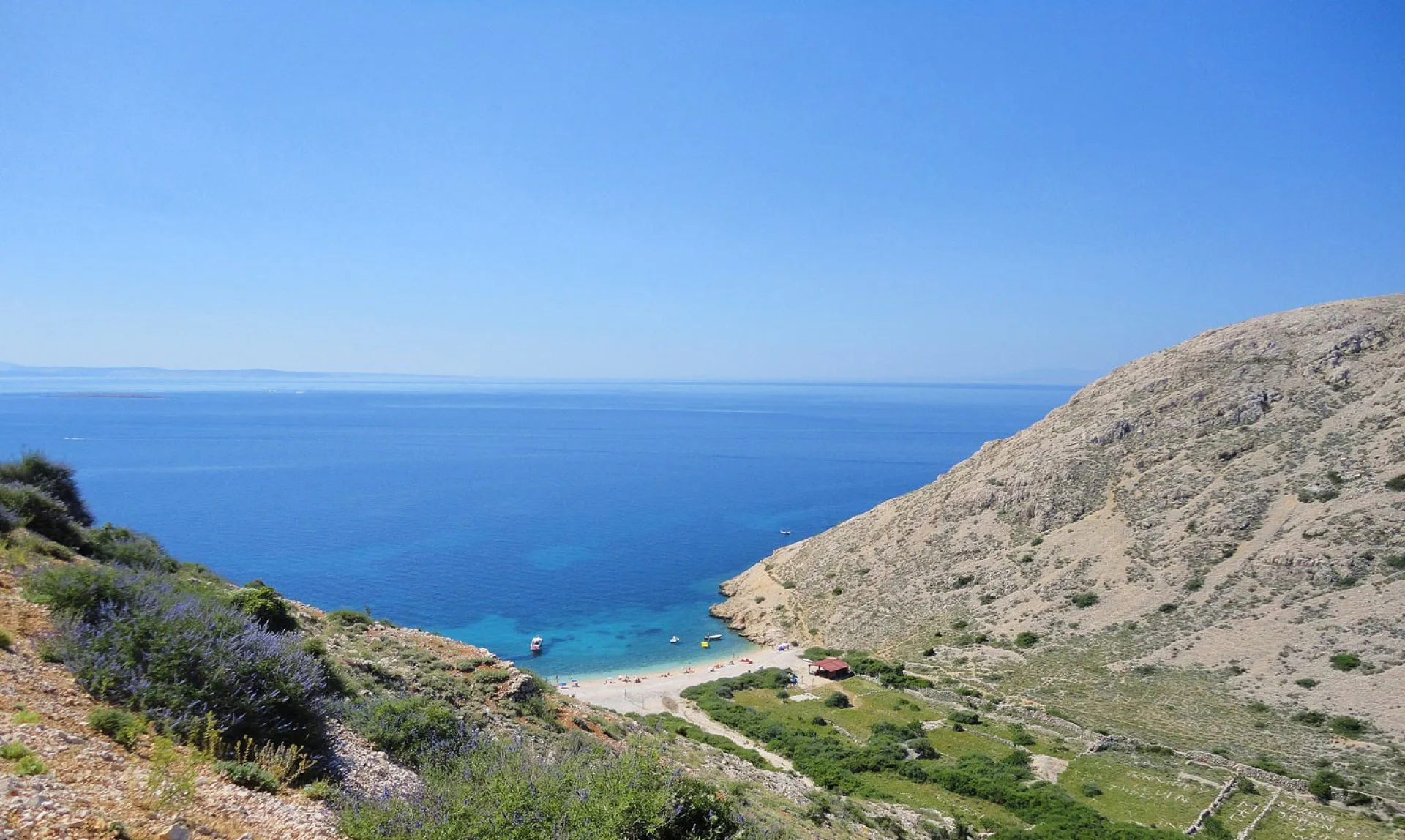

Krk Island offers beaches, wine villages, Roman ruins and a coastline full of coves. Connected to the mainland by the Krk Bridge, toll-free since 2020, it is Croatia’s largest island together with Cres (about 406 km² each) and the most accessible. Whether you are staying with us for a week or planning a day trip, this guide covers what we know.
Getting to Krk Island
One of the things we love most about Krk is how easy it is to reach. There is no ferry from the north and no timetable to consult.
- Rijeka Airport (Krk's own airport) — sits on Krk Island itself, 30 minutes by car from Vrbnik and 45 from Stara Baška. It handles flights from across Europe in summer, including several low-cost carriers. If you are flying in, this is the one.
- Zagreb Airport — approximately 2.5 hours by car. A comfortable drive, especially if you take the A6/A7 motorway towards Rijeka and then cross the Krk Bridge.
- Krk Bridge — 1,430 metres long, connecting the island to the mainland near Rijeka. It has been free of charge since 2020. On summer weekends, though, it can jam for hours, so cross early in the morning or midweek.
- From the south — a ferry runs between Valbiska on the western side of Krk and Merag on Cres island. For Rab, a car ferry runs all year from Valbiska to Lopar, and in summer a passenger catamaran also calls at Baška: useful if you are island-hopping.
We always tell guests arriving by car to allow a little extra time when driving down into Vrbnik or Stara Baška — the final roads are winding and narrower than the navigation app suggests. It is worth it.
Explore Vrbnik — The Wine Village
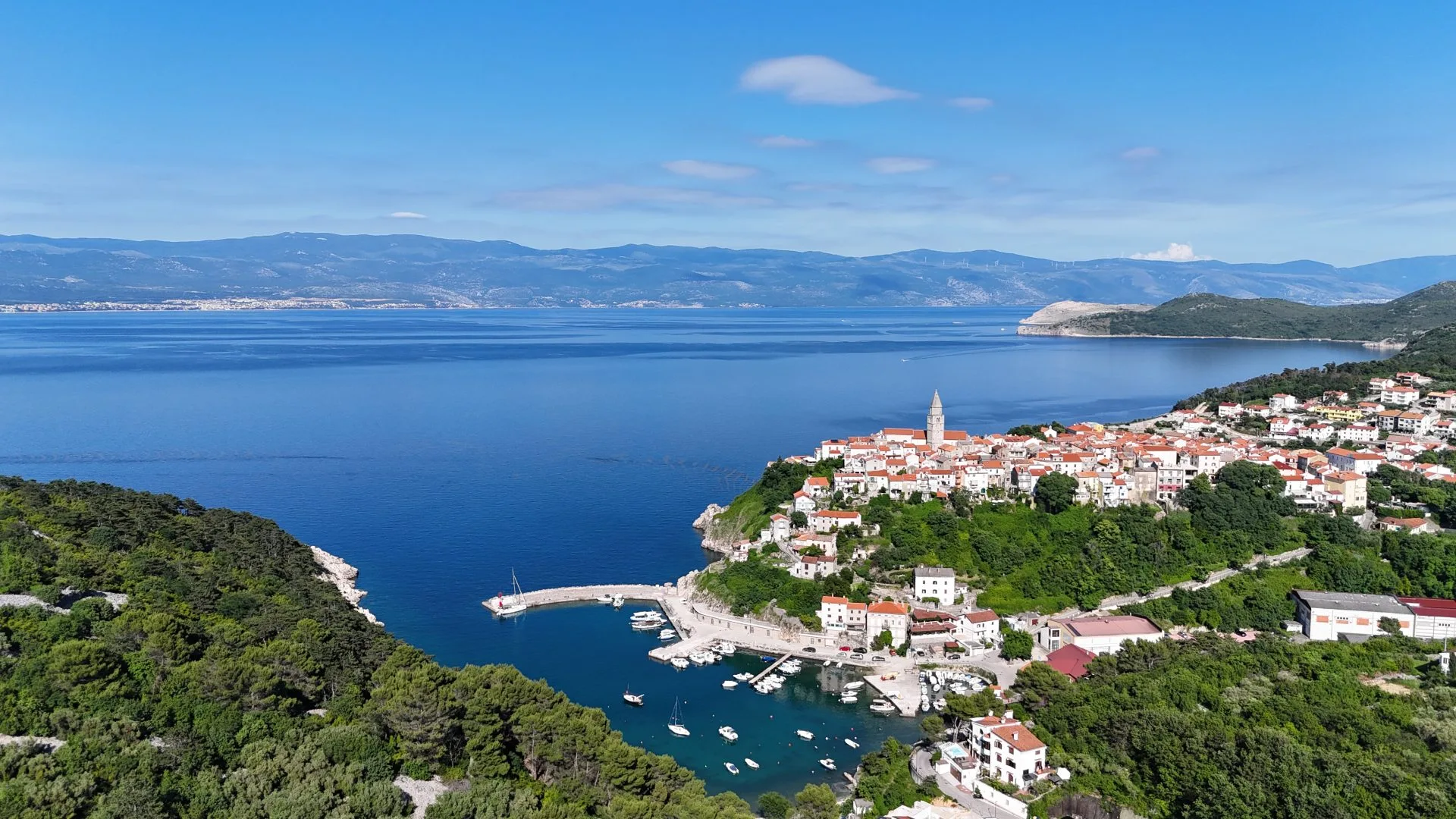
Eight minutes on foot from Villa Moana and Villa Manatis, Vrbnik is the place we walk to most often. It sits about 50 metres above the sea on a limestone cliff, and the view from the terrace is one of the finest on the island. But Vrbnik is not just a viewpoint.
- Klančić — a lane about 43 centimetres wide at its narrowest. It is often called the world’s narrowest street (it isn’t: Reutlingen’s is 31 cm), but you still turn sideways and shuffle through. Carry on to the little Opjica square for the view across to Crikvenica.
- Žlahtina wine — an indigenous white grape of the Kvarner, grown mostly in the Vrbnik field behind the village. You can taste it at Restaurant Nada or at one of the village cellars. See our full wine guide for details.
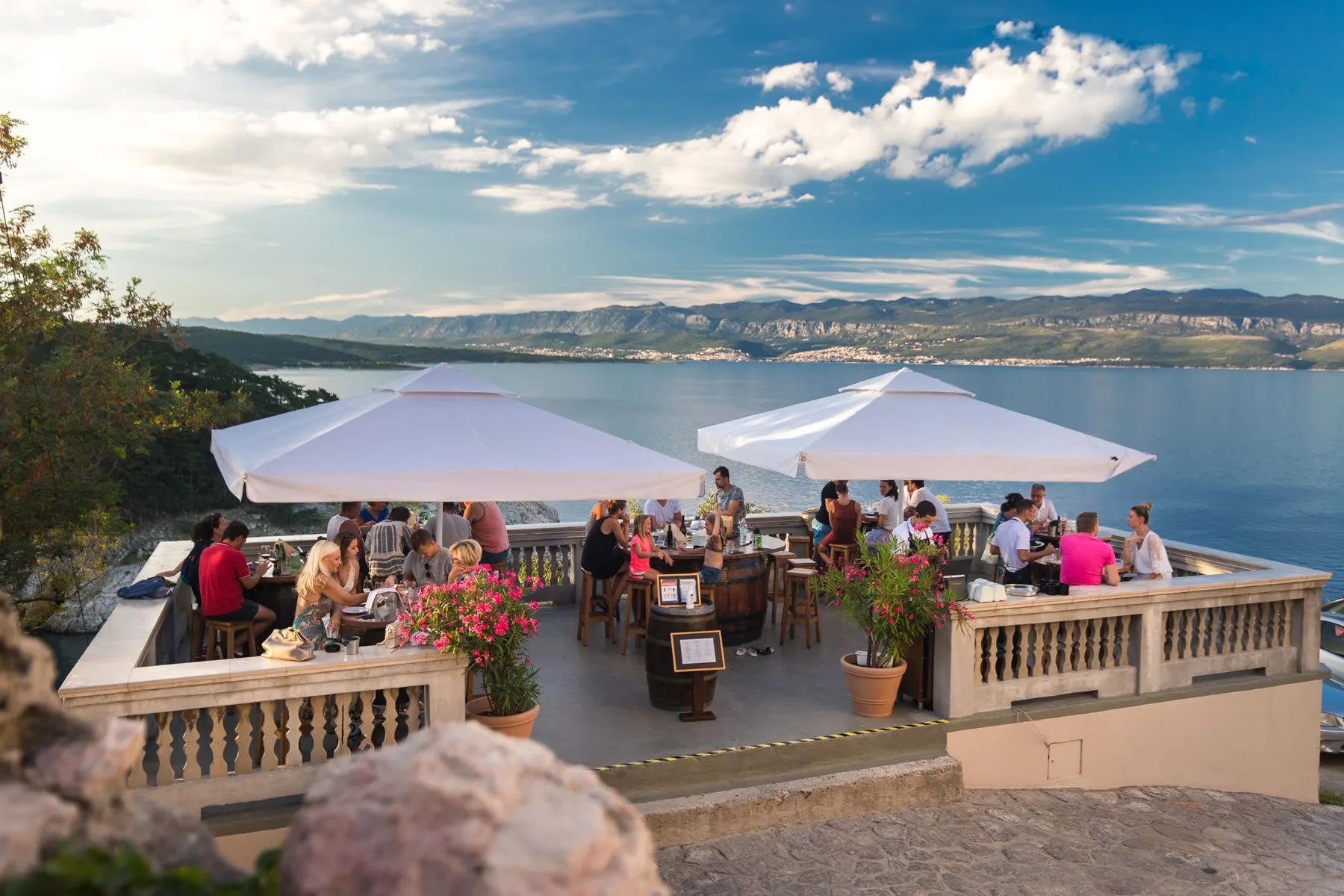
- The cliff edge at dusk — Vrbnik faces east, so the sun sets behind you: walk to the cliff edge of the old town in the evening and watch the light change on the mainland coast across the Vinodol Channel. Bring a glass of Žlahtina.
The village itself has a small square, a handful of restaurants, a bakery, and a kind of quiet that is increasingly rare in Croatia. It does not feel like a tourist village. It feels like a place where people live.
Krk Town: 2,000 Years of History
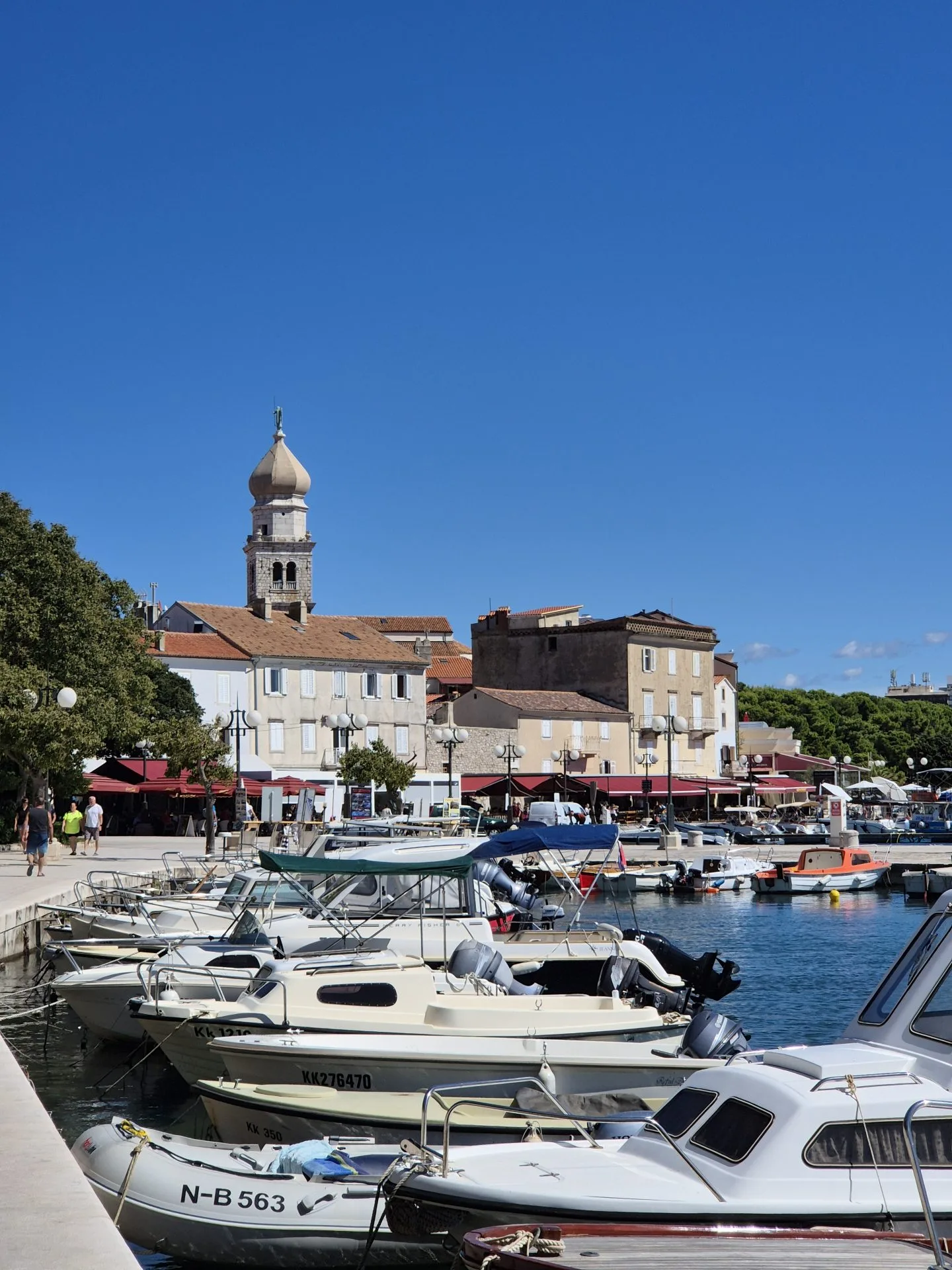
Krk Town is the island's main settlement and one of the oldest continuously inhabited cities in Croatia. Walking through the old town, you are moving through layers of history — Roman, early Christian, medieval Frankopan — stacked on top of each other like geological strata.
- Frankopan Castle — the 12th-century fortress that sits on the waterfront, built by the Frankopan family who ruled Krk for centuries. The views from the towers take in the whole bay.
- Cathedral of the Assumption — built on a 5th-century basilica over Roman baths, and rebuilt over the centuries from Romanesque to Baroque. It is still an active cathedral.
- Roman walls — sections of the original Roman city walls are still standing and visible. You can walk along the circumference of the old town in roughly 15 minutes and pick out the different historical periods in the stonework.
- Košljun Island — a tiny island in Punat Bay, a short drive from Krk Town, home to a Franciscan monastery founded in 1447. Small boats take you across from Punat harbour. Inside: a library of about 30,000 volumes (including a 1511 Ptolemy atlas), a Last Judgement about 10 metres wide and a quirky ethnographic room. Entry is cash only.
Beaches on Krk Island
We have a full guide ranking the best beaches on the island at /journal/krk-beaches-guide/ — worth reading before you arrive. Here is a quick overview of the ones closest to our villas and the ones worth the journey.
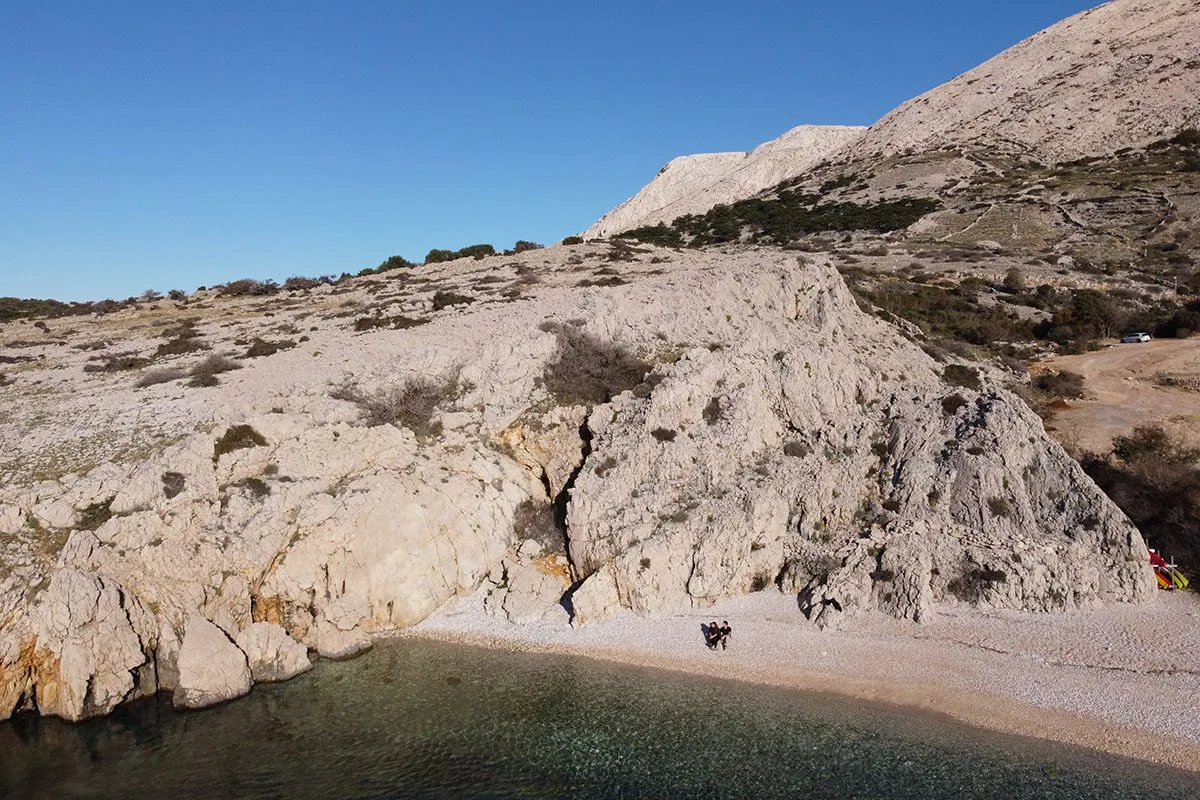
- Zala Beach (Stara Baška) — a few minutes south of the village by car (small car park above the beach, short path down), 10 minutes by boat from the harbour or a 20-minute walk. Turquoise water, wild limestone surroundings. Our most-recommended beach for guests at Villa Marim.
- Oprna Bay — one of Krk’s most popular bays, near Stara Baška: 15–20 minutes by boat, or a short drive and a steep 10–15-minute path down from the road (not for strollers). In July and August go before 9:30, and park with all four wheels off the asphalt. A small bar operates in summer.
- Secret Beach Vrbnik (Pod Kovač) — a tiny pebble cove on the outer side of Vrbnik harbour, below the cliff, reached through a short passage in the rocks by the pier. Few visitors find it, though it is on the tourist-board beach list. Morning sun, deep shade from early afternoon.
- Baška Beach — 1.8 kilometres of pebble-and-sand beach in the south of the island. The most popular beach on Krk. Go early or in September.
Discover Biserujka Cave
In the north-east of the island, at Rudine, Biserujka is Krk’s only show cave — and it tends to attract far fewer visitors than the beaches.
The cave is about 110 metres long, with stalactites and calcite columns, and stays at about 15°C all year — genuinely welcome in August, when the island is at its hottest. The walk-through is short and easy even with small children, so it is best on a hot or rainy day. Add the 30-minute educational trail from the cave, or a swim in Soline Bay.
The Baška Tablet
This one is for the curious. In 1851, a stone tablet was discovered inside the Church of St. Lucy in Jurandvor, a small village just outside Baška. The tablet — now known as the Baška Tablet — is dated to around 1100 AD. Carved in Glagolitic script, it records a land gift by King Zvonimir, the first time a Croatian king’s name is written in Croatian. It is a key document in the history of the Croatian language.
The original is housed in the Croatian Academy of Sciences and Arts in Zagreb. A high-quality replica is displayed in the church in Jurandvor, which is open to visitors. If you are driving down to Baška, the church is worth a five-minute stop. Entry is a few euros (tickets in the small yellow building below the church), and it takes you briefly out of summer-holiday mode into something quieter.
What to Eat on Krk
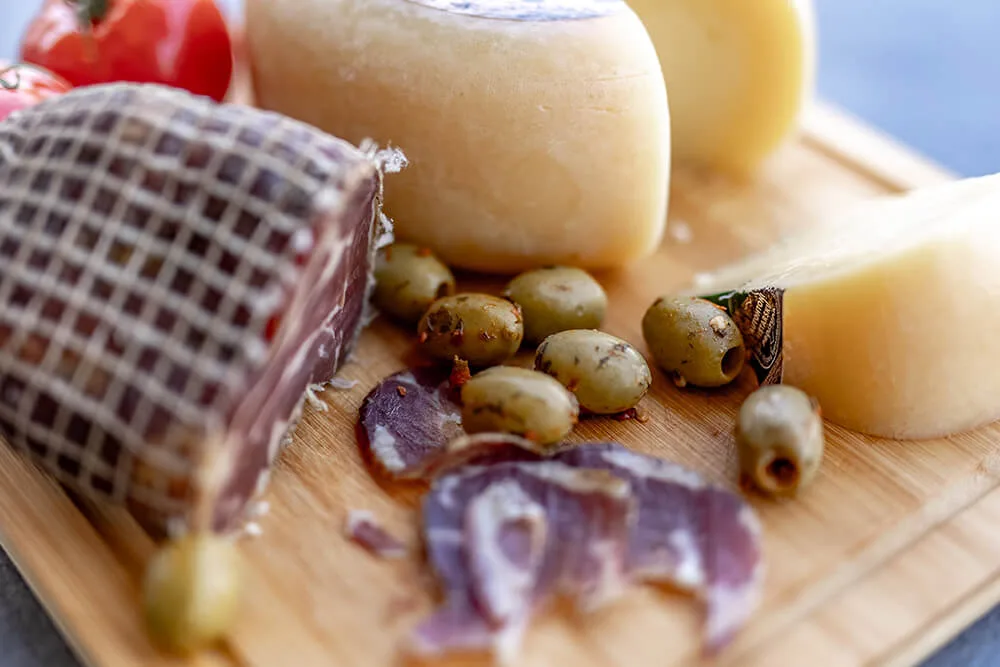
The food on Krk is honest and specific to the island. These are the dishes and ingredients we return to every summer.
- Šurlice — hand-rolled spiral pasta unique to Krk. Each piece is rolled by hand around a thin rod, creating a hollow spiral shape. Traditionally served with lamb, seafood, or a rich sauce. You can find it in most good restaurants on the island. Do not leave without trying it.
- Krk lamb — grazed on the aromatic herbs of the island's dry grassland. The flavour is genuinely different from mainland lamb. Lighter, more fragrant. Slow-cooked, it is one of the best things you can eat in Croatia.
- Žlahtina wine — pair it with everything seafood. The mineral quality of the wine and the freshness of the Adriatic fish are made for each other. See our Vrbnik wine guide for where to taste it.
- Peka — a dish that requires patience. Lamb or octopus slow-cooked for 3 to 4 hours under a heavy iron dome covered with embers. You must order it in advance at a konoba — usually the day before. When it arrives, it is worth everything.
"The most beautiful holiday villa on Krk, fantastic amenities, direct sea access."
— Klaus, guest at Villa Marim

Frequently Asked Questions
How do you get to Krk Island from the airport?
Rijeka Airport is a 30-minute drive from Vrbnik and the closest airport to Krk. Zagreb Airport is approximately 2.5 hours by car. Krk Bridge connects the island to the mainland — no ferry needed from the Rijeka direction. The bridge has been free since 2020.
What is Krk Island known for?
Krk is known for Žlahtina wine (grown mostly in the Vrbnik field), its coves and beaches, the ancient town of Krk (over 2,000 years of history), and as Croatia’s largest island together with Cres (about 406 km² each).
What is the best time to visit Krk?
May, June, and September offer the best combination of warm weather, clear water, and far fewer crowds. July and August are the warmest but also the busiest. See our full guide on shoulder season: /journal/krk-off-season/
Is there a ferry to Krk Island?
From the Rijeka direction there is no ferry — Krk Bridge connects the island to the mainland for free. A ferry runs between Valbiska (western Krk) and Merag on Cres island. For Rab, a car ferry runs all year from Valbiska to Lopar, and in summer a passenger catamaran also calls at Baška.
What is Žlahtina wine and where can I try it?
Žlahtina is an indigenous white grape of the Kvarner, grown mostly in the Vrbnik field on Krk. Dry, mineral, best with seafood. Try it at Restaurant Nada in Vrbnik or at one of the village cellars — all a short walk from Villa Moana and Villa Manatis.