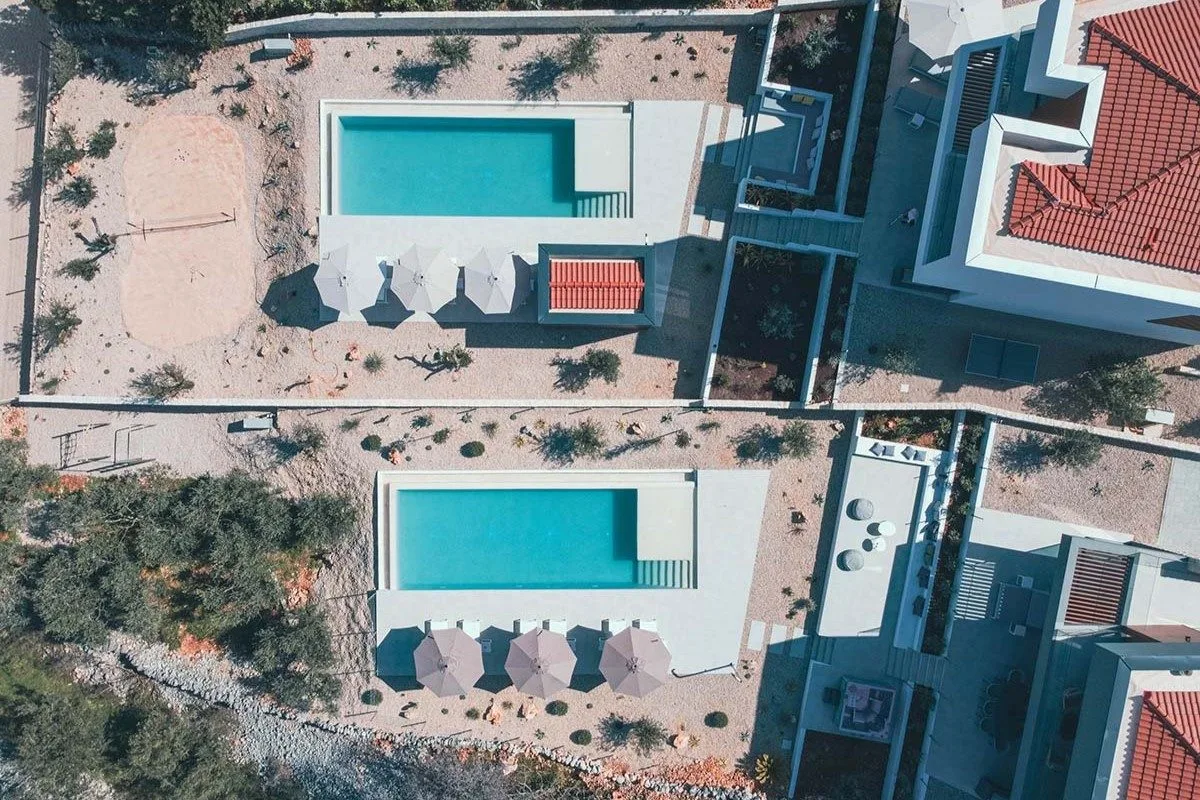

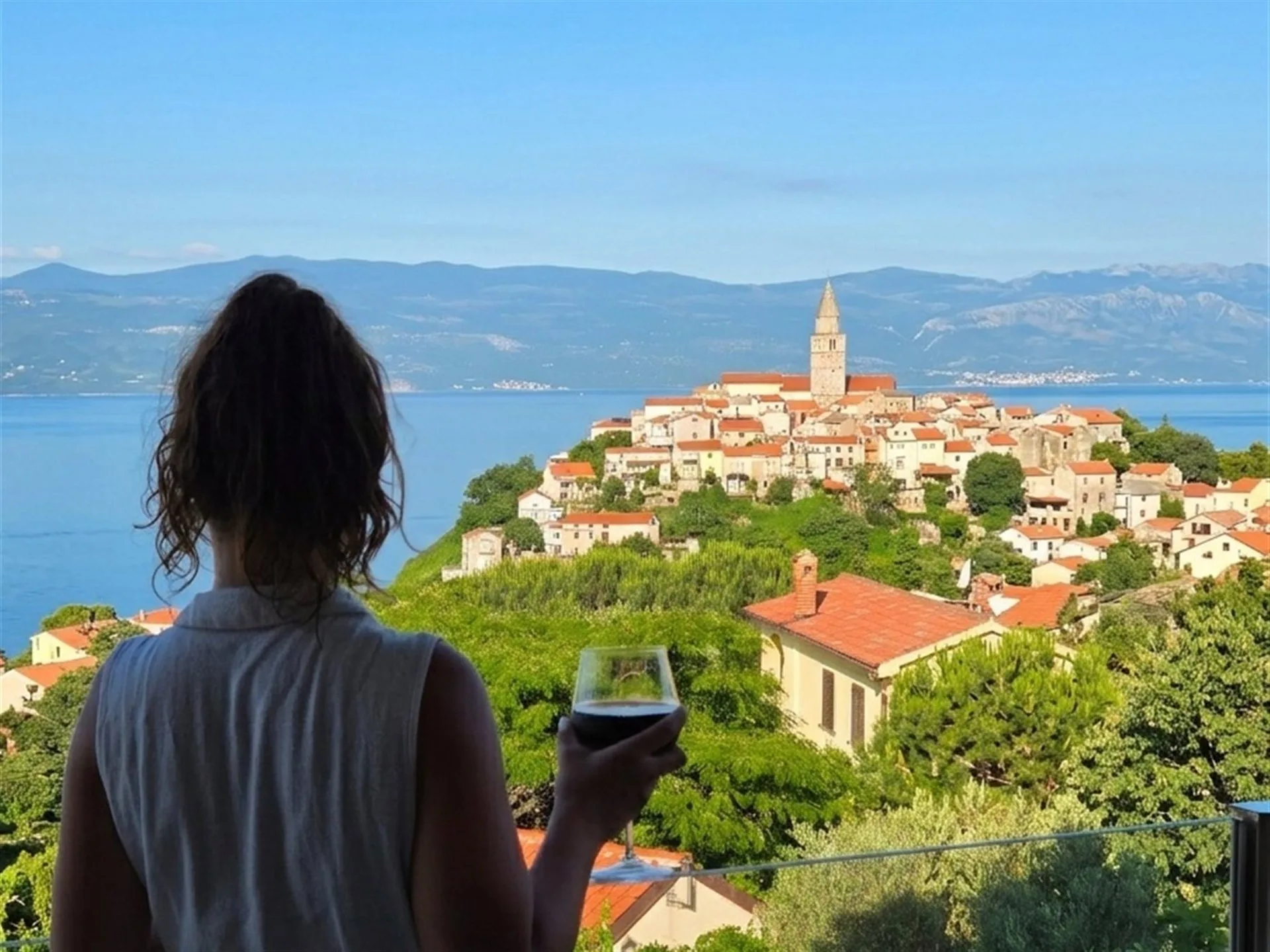
Žlahtina grows mainly in one place: the vineyards of the Vrbnik field on Krk. Villa Moana and Villa Manatis are in Vrbnik, a short walk from the cellars. Here is what the wine is, where to taste it and how to buy it straight from the people who make it.
What is Žlahtina?
Žlahtina is an indigenous Croatian white grape. Its name comes from a Slavic word meaning “noble”. It is grown mainly in the Vrbnik field on Krk (according to the village cooperative, Žlahtina covers almost 98 % of the vineyards there), and the island’s tourist board lists eight registered producers of Vrbnička Žlahtina.
- In the glass: light, fresh and greenish-yellow, with fruit on the nose.
- With bubbles, too: several Vrbnik producers make a sparkling Žlahtina, and one ages it on the seabed (more below).
- Serve it: well chilled, at 8–12 °C.
- With: grilled fish, šurlice (Krk’s hand-rolled pasta), island pršut and sheep’s cheese.
The producers worth visiting
The following six registered producers all receive visitors in or just outside Vrbnik, and most are a short walk from Villa Moana and Villa Manatis. Each does something different.
Katunar: the estate on the road into Vrbnik
A four-generation family estate (32 hectares and about 220,000 vines, by its own account), with a shop and tasting room beside the road into the village. Beyond the classic Žlahtina, ask about its pét-nat. Its long summer hours (9:00–21:00 from June to September, 9:00–16:00 from October to May) make it the easy place to buy a bottle in the evening.
Kuća vina Ivan Katunar: the house cellar above the village
A different family business, about 500 metres from the estate and easily confused with it. The cellar is under the house, and the tasting room looks over the village. The full tasting pours seven wines, among them a sparkling Žlahtina, a Sansigot red and a prošek dessert wine, with pršut, cheese and a slice of presnec, the Krk wedding cake. Book direct by phone or e-mail (about €27–29 in 2026): the same tasting costs roughly twice as much through online resellers.
Gospoja: the tasting room in the old town
Founded in 1995 by the Toljanić and Brusić families (Toljanić is also one of their labels, not a separate registered producer). Their tasting room in the old town, at Vitezićeva 9, takes walk-ins daily from April to October. It also pours wines from other Vrbnik producers, so you can compare Žlahtinas side by side. Order the pršut and cheese board; Gospoja cures its own pršut.
PZ Vrbnik: the cooperative at the harbour
The village cooperative, founded in 1904, sits at the harbour. The bottle to take home is Valomet Podmorski: a sparkling Žlahtina aged on the seabed at around 30 metres, at a spot off north-east Krk that the cooperative keeps secret. Ask for the “podmorski” version, because the cooperative also sells an ordinary Valomet. Cellar visits are by arrangement; write ahead with the date and number of people.
Šipun: for the curious
A small winery run by the agronomist Ivica Dobrinčić, who has brought forgotten Kvarner grapes back into production: Žlahtina alongside Sansigot, Trojišćina, Jarbola and others. It is listed by Gault&Millau Croatia. Arrange a visit ahead by phone or e-mail. Without one, look in at Placa Šipun, the wine bar on the main square that carries the winery’s name (open in summer 2026).
Nada: a glass with a view
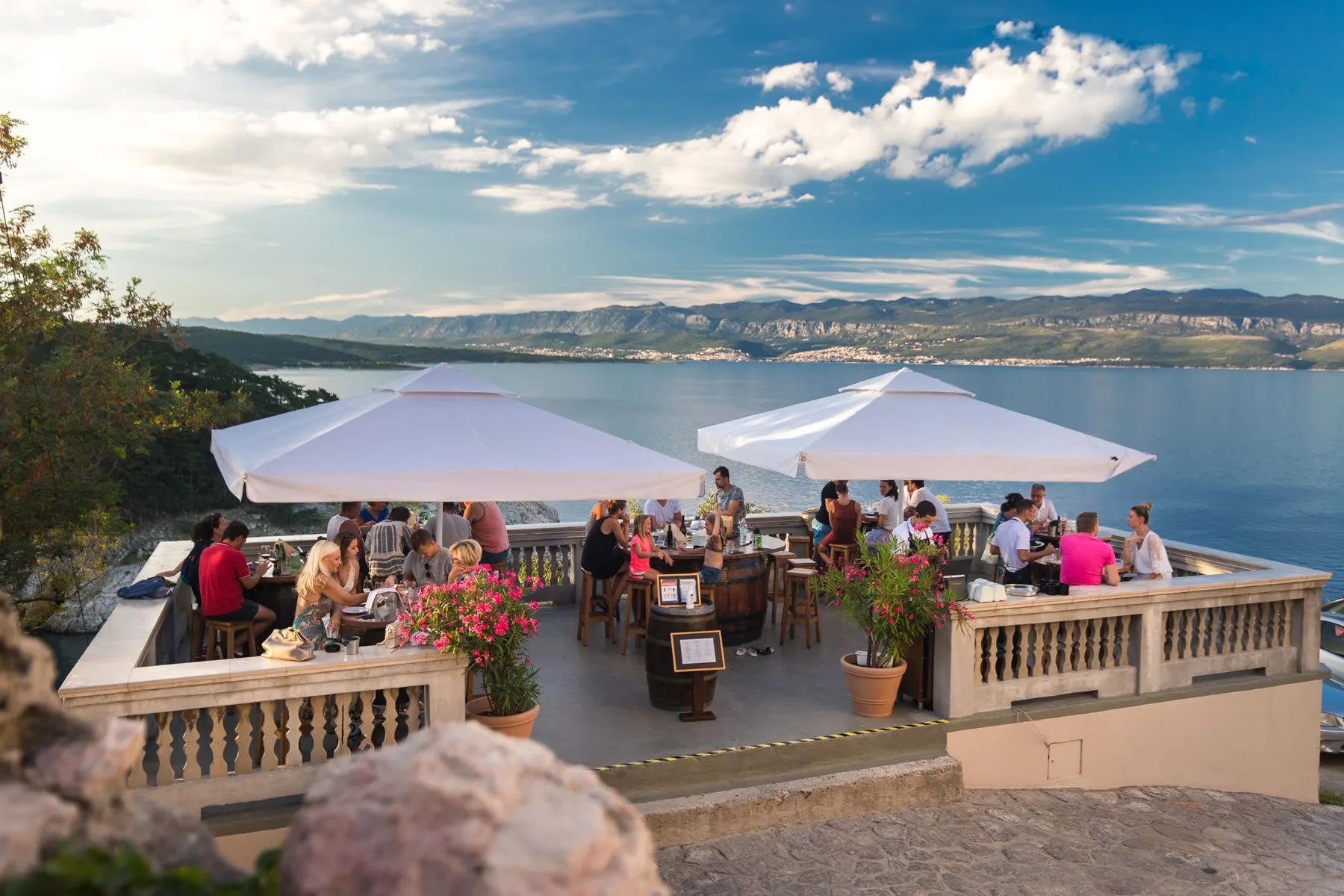
Nada makes its own wines, a Žlahtina among them, and runs a restaurant, a konoba with a terrace on the cliff edge and a wine shop in the old town. For a glass without a full dinner, sit in the konoba and order a plate of pršut, cheese or salted fish. The terrace looks across the Kvarner Bay to the mainland coast; book it in July and August.
Nada is about ten minutes on foot from Villa Moana and Villa Manatis, close enough to walk home afterwards.
When to come
- April to October: Gospoja’s tasting room and Nada are open daily. Katunar is open all year, with shorter hours from October to May. Book ahead in July and August.
- Vrbnik Wine Days (Dani vina): two days of wine in the village, with food and live music in the evenings. On the Saturday, a Wine Walk leads through six cellars; places are limited and must be registered in advance. In 2026 it was the 20th edition, on 21–22 August.
Taking wine home
- Buy direct: Katunar, Kuća vina Ivan Katunar, Gospoja, PZ Vrbnik and Nada all have their own shops, and at Katunar you can taste before you buy.
- A bottle with a story: Valomet Podmorski from the seabed, or Šipun’s Trojišćina rosé, from a forgotten Kvarner grape.
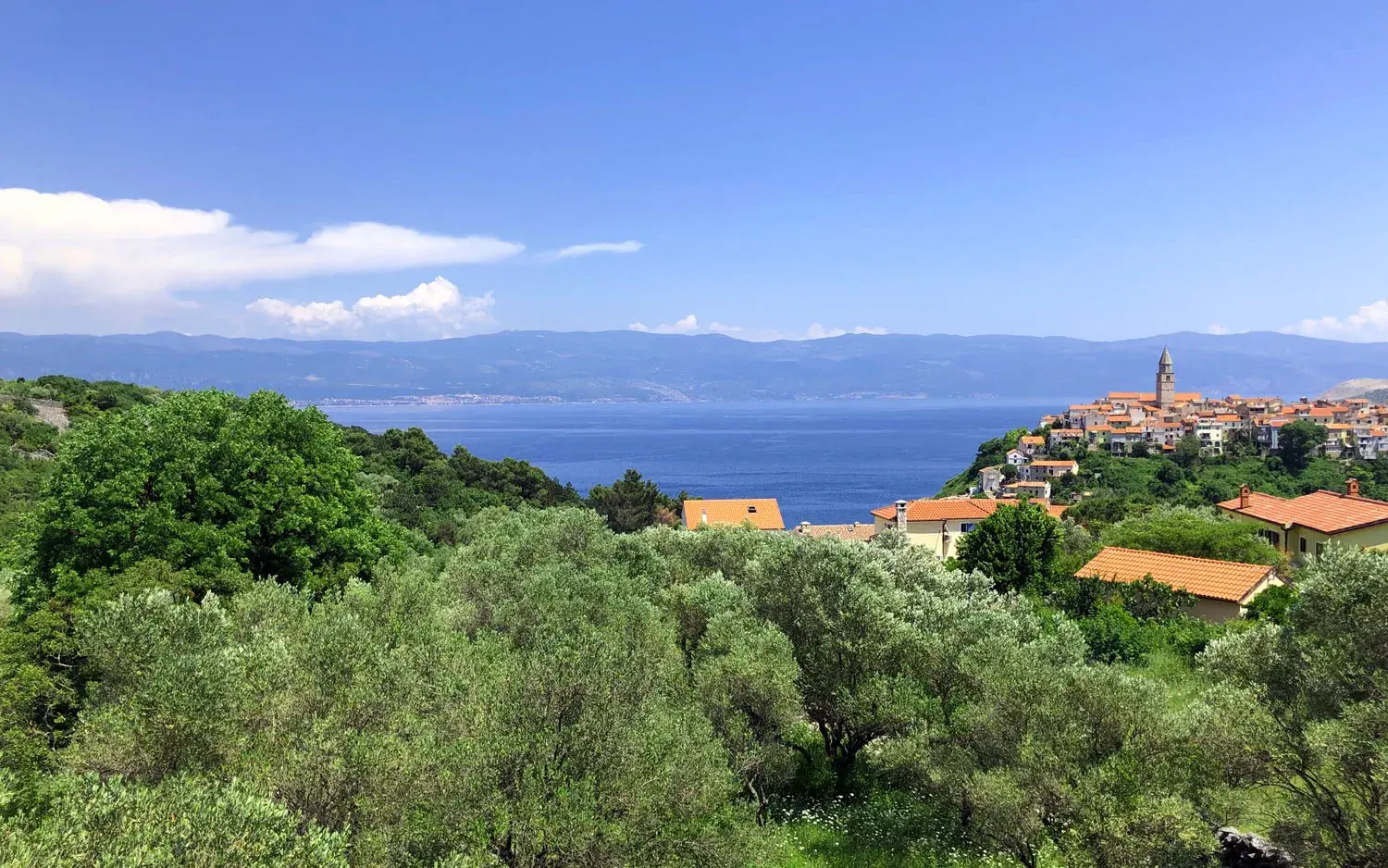
"This was our sixth vacation in Vrbnik and while we typically stay in the old town area, this time we decided to try something different and we were blown away."
— Edina, guest at Villa Moana, August 2026

Frequently Asked Questions
What is Žlahtina wine?
An indigenous Croatian white grape, grown mainly in the Vrbnik field on Krk Island. It makes a light, fresh white with fruit aromas, and several producers also make it sparkling. Serve it at 8–12 °C.
Where can I buy Žlahtina wine in Vrbnik?
Direct from the producers: Katunar (on the road into Vrbnik), Kuća vina Ivan Katunar, Gospoja (tasting room in the old town), the PZ Vrbnik cooperative at the harbour, Šipun (arrange ahead) and Nada. Eight producers are registered for Vrbnička Žlahtina.
Are wine tastings available near Villa Moana and Villa Manatis?
Yes. Most Vrbnik cellars are a short walk from both villas. Gospoja’s old-town tasting room takes walk-ins daily from April to October; Kuća vina Ivan Katunar and Šipun: arrange ahead by phone or e-mail. Book the Ivan Katunar tasting direct: online resellers charge roughly double.
When is the Vrbnik wine festival?
The 20th Vrbnik Wine Days (Dani vina) were held on 21–22 August 2026. The Saturday Wine Walk through six cellars has limited places and needs registration in advance.