What do you want to see?
Area · The Krk Map
Baška south-east coves: Bunculuka, Vrženica, Vela Luka and Mala Luka
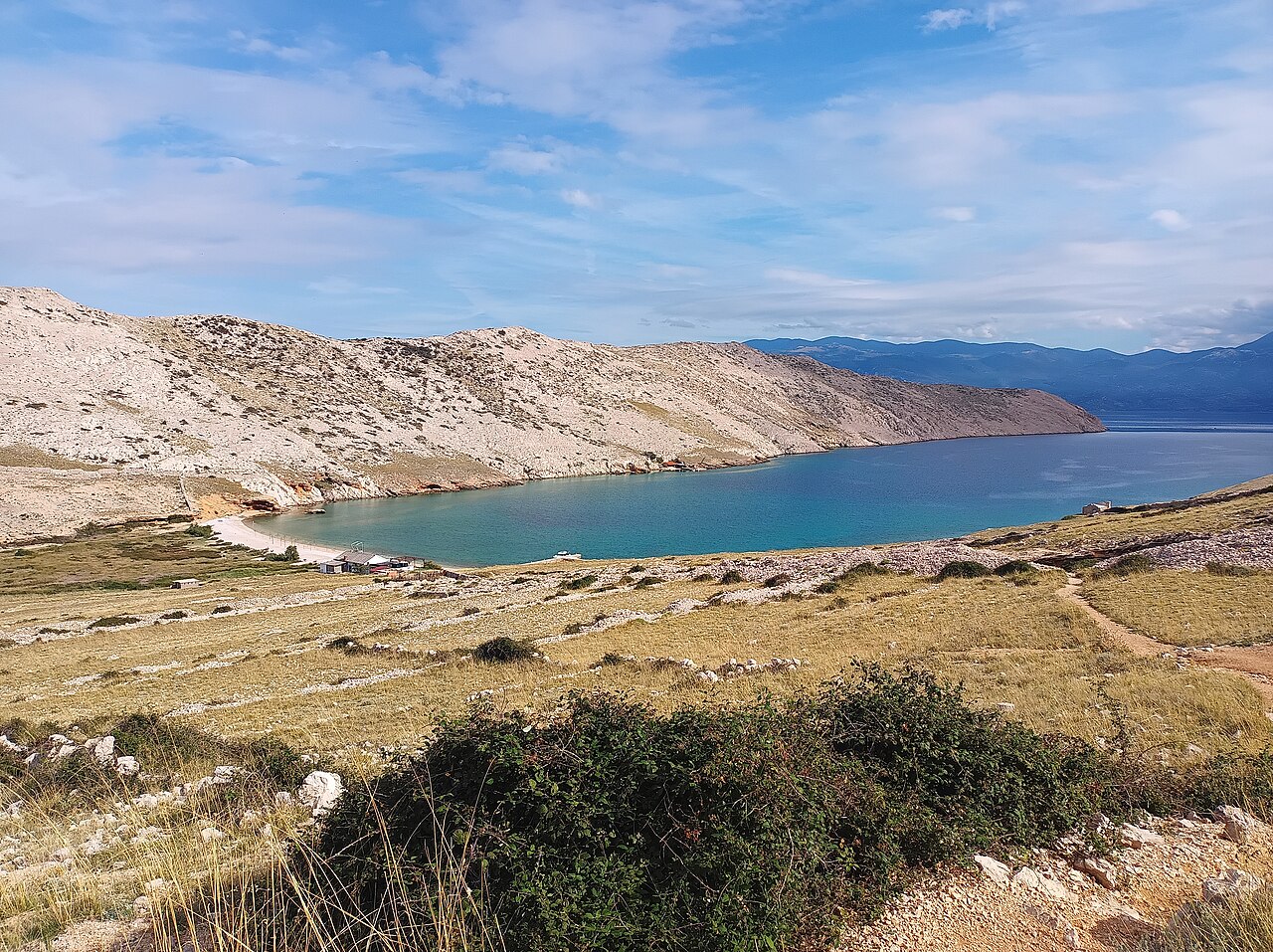
No road, just bare hills, sheep and pebble coves: ten minutes by taxi boat from Baška harbour, or a hot, beautiful hike.
Open this guide on The Krk Map
East of Baška the coast turns wild. Past Bunculuka there is no road: just bare karst hills, sheep and a row of pebble coves that you reach by a 10–15 minute taxi boat or a demanding hike over the headland. Vela Luka has loungers, a konoba and a tiny fishing museum in a fishermen's hut; Mala Luka next door is smaller and more pastoral; Bunculuka is a naturist camp beach, and the small coves beyond it towards Vrženica are wild and mostly naturist. It is a good answer to a crowded August day in Baška, for couples, families who swim well and anyone happy to carry their own shade.
When to come: Boats and cove konobe in summer (exact dates unpublished). Hiking best April–June and September–October; in July–August walk at dawn only.
What to do
Take the taxi boat, and fix your pickup time on the pier
Boats of 6–12 seats leave Baška harbour from 08:00, every 15–30 minutes, about 10–15 min to Vela Luka; they also serve Mala Luka, Vrženica and Prvić. The last boat back runs around 20:00: agree your return time when you leave. About EUR 20 per person return to Vela Luka (2025–2026).
- Where
- The taxi-boat pier in Baška harbour. King sells at Palada 12 and at a booth in the port; Tigar has a desk in the port.
- When
- Take one of the first boats (by about 09:30) to get shade at the cove; come back before the last boat around 20:00.
- Time
- Half a day or a full day
- How
- Walk up to a booth, buy a return (or a one-way if you plan to walk back), agree the pickup time and save the skipper's phone number. Groups of more than six should book ahead.
Tip: Keep your phone charged and write down the pickup time. If Vela Luka is busy, ask to be dropped at Mala Luka. On strong-wind days boats may not run; ask at the booth the evening before.
Vela Luka: the deep bay, the shade under the cave and grilled squid
A deep bay at the end of a bare karst valley: about 160 m of pebble and small stones with loungers, parasols, a restaurant and a toilet, and a separate 30 m beach nearby. Sheep graze on the slopes. An umbrella with loungers cost about EUR 30 in 2026.
- Where
- Vela Luka beach, in the deep bay east of Baška, with its own taxi-boat landing.
- When
- Arrive by 10:00 in June–September; by midday the bay fills with boats and private umbrellas.
- Time
- 3–5 h
- How
- Taxi boat from Baška (10–15 min), or the hike from the Bunculuka side.
Tip: Take the shade under the cave on the left side of the bay, or in the side coves. Order the grilled squid at the konoba and bring cash. The water can be very cold.
Look into the Buymer fishing museum and the tunera
A tiny fishing museum in a former fishermen's hut at Vela Luka that still serves as a refuge for sailors. It shows traditional fishing tools, boat gear and finds from the surrounding sea. Next to it stands a tunera, the tall ladder-lookout from which Kvarner fishermen watched for tuna.
- Where
- On the south-east side of Vela Luka bay, with the tunera beside the museum.
- When
- During a Vela Luka day; opening times vary.
- Time
- 20 min
- How
- Walk along the bay from the beach.
Tip: It is run by the Buymer association (founded 2012). If it is shut, the tunera alone is worth the walk and explains why this bay mattered to fishermen.
Climb to Corinthia, the Byzantine fort between the two bays
On the hill between Vela and Mala Luka lie the ruins of Corinthia (Korintija, Bosar): a fort (kastron) and a settlement with three churches and two wells from the time of Emperor Justinian (6th century), with the remains of a later St Nicholas monastery. The short climb is not easy, but it gives the view down into both bays.
- Where
- The ruins and the Korintija summit, on the hill between Vela Luka and Mala Luka.
- When
- Morning, before the rock heats up.
- Time
- 1–1.5 h return from the beach
- How
- From the Vela Luka beach on foot; rocky, no shade. Proper shoes.
Tip: Do it on the way over to Mala Luka, and take water. The fort sits on a hill about 129 m high.
Walk over to Mala Luka for a quieter afternoon
The smaller sister bay about 1 km north of Vela Luka: about 80 m of small pebble, sheep meadows and the ruins of St Nicholas on the headland. A small fish restaurant opens in season.
- Where
- Mala Luka beach, the smaller sister bay about 1 km north of Vela Luka.
- When
- Afternoon, after lunch at Vela Luka.
- Time
- 20 min walk each way, plus swim time
- How
- Footpath from Vela Luka (no flip-flops), or ask the taxi boat to drop you there.
Tip: Lunch at Vela Luka, afternoon at Mala Luka, and ask the skipper to collect you from Mala Luka.
Beyond Bunculuka: Jablanova, Mali raj and Vela Vrženica
Past the camp a rough coastal path strings together small wild coves: Jablanova (about 50 m, pine shade), tiny Mali raj, Malo Storišće (about 50 m) and Vela Vrženica (about 190 m of small pebble with pines right behind it). Rarely crowded, even in high season, because you have to walk or come by boat. Naturism is accepted here.
- Where
- Along the rough coastal path east of the Bunculuka camp: Jablanova, Mali raj, Malo Storišće and Vela Vrženica.
- When
- Morning to mid-afternoon.
- Time
- About 25 min on foot past the camp; half a day
- How
- Coastal path from the Bunculuka camp (rough; no flip-flops), or a taxi boat from Baška harbour (ask for Vrženica).
Tip: Take the boat out and walk back, or the reverse. Mali raj is tiny: go early to get it. There are no facilities at any of these coves.
Walk 15 minutes over the headland to Bunculuka
The first cove east of town: about 500 m of enclosed pebble beach in front of a naturist camp, with a restaurant, a shop, showers, loungers, SUP and canoe rental and a dog beach.
- Where
- Bunculuka beach, the first cove east of Baška, over the headland.
- When
- Morning, in the camp season (check the dates before you go).
- Time
- Half a day
- How
- About 15 minutes' walk east from Baška centre over the headland, or drive to the car park by the camp entrance (paid in season). Non-guests pay to enter the camp in season.
Tip: Nudity is the rule on the camp beach. It is also the gateway to the wilder coves beyond and the start of the hike to Vela Luka.
Hike out at 07:00, take the boat back
The walker's version: from the Bunculuka side a well-marked path, partly on old shepherds' tracks, climbs to the Rebica viewpoint (about 311 m) over Prvić, then zig-zags steeply down to Vela Luka. Swim, eat, and buy a one-way taxi-boat ride back to Baška.
- Where
- Start near the Bunculuka camp, east of Baška centre (car park paid in season); the path passes the Rebica mrgari.
- When
- May–June and September–October; in July–August leave at dawn.
- Time
- 2–2.5 h one way, plus the boat
- How
- Sturdy shoes, 2+ litres of water each, sun hat. The serpentine descent is slippery. Check boat times at the harbour before you set off.
Tip: Fit adults can make it a loop down the dry Vrženica canyon instead: it needs hands in about three places, traps heat, and is not for children, dogs or grandparents.
For the adventurous: Prvić by taxi boat
Prvić, across the strait from Baška, is the largest uninhabited island in Croatia and a special botanical-zoological reserve since 1972 that includes the surrounding sea. Its cliffs rise up to 300 m; only the gentler western side has pebble and sand coves, which is where the boats go.
- Where
- Prvić, off Baška; the boats go to the coves on its gentler western side.
- When
- Calm summer mornings only: Prvić is one of the windiest places on the Croatian coast, with bura on about 200 days a year.
- Time
- Half a day
- How
- Taxi boat from Baška (Tigar and others). Take everything you need; there are no services.
Tip: Treat it as a look-and-swim stop and leave no trace: it is a nature reserve, so stay on the shore and keep away from the vulture cliffs.
A half day here
- 09:00 Taxi boat from Baška harbour to Vela Luka; agree a 17:30 pickup from Mala Luka and save the number.
- 09:15 Claim the shade under the cave on the left side of Vela Luka; swim.
- 11:00 Look into the Buymer fishing museum and the tunera; if it is not too hot, climb to Corinthia for the view over both bays.
- 13:00 Grilled squid at the Vela Luka konoba (cash).
- 15:00 Walk 20 minutes over to Mala Luka for a quieter afternoon swim.
- 17:30 Boat back; evening walk up to St John's in Baška.
Where to eat and drink
- Mala Luka cove restaurant: Small seasonal fish restaurant in Mala Luka.
Where to swim
- Vela Luka: The main taxi-boat bay: loungers, konoba, shade under the cave on the left.
- Mala Luka: Smaller and more pastoral, 20 minutes' walk on from Vela Luka.
- Vela Vrženica: Wild small-pebble cove with pines behind it; naturist-friendly; path or boat.
- Bunculuka naturist beach and coves: Naturist camp beach 15 minutes' walk from town; paid entry.
Practical
How the taxi boats work
Tickets at Baška harbour (King: Palada 12 and a port booth; Tigar: a desk in the port). First boats 08:00, then every 15–30 min; last return around 20:00, agreed when you leave. One-way tickets for hikers. Groups over six book ahead.
By boat from Vrbnik, without driving to Baška
From Vrbnik, the wooden boat Curicta runs a 6-hour southern route from 10:00, with about two hours at Mala and Vela Luka, plus Zečevo, the vulture cliffs and a swim stop (EUR 320 for up to 6, EUR 390 for up to 12; 2026 prices).
What to bring
Cash for the cove konoba, water shoes (sea urchins in the wild coves), an umbrella if you go beyond the rental rows, water and a hat. The wild coves between Bunculuka and Vrženica have no services at all. Vela Luka has a toilet; Bunculuka has the camp's facilities.
Naturism
Bunculuka is a naturist camp beach: swimwear is not allowed on the beach. Jablanova, Mali raj, Malo Storišće, Vrženica and several coves further east are naturist-friendly. The main Vela Luka and Mala Luka beaches are not naturist beaches.
Dogs
The Baška beach rules ban pets outside the dog beaches; Bunculuka has a dedicated dog beach.
Watch out
- Missing the last boat back: agree the pickup time and save the skipper's number before you leave the pier.
- Strong wind stops the boats. Vela Luka is open to the south and the whole coast takes the bura.
- The hike has no shade and a steep, slippery descent; the climb back up is the hardest part. Never at midday in July–August.
- The Vrženica canyon needs hands-on scrambling and traps heat: fit adults only.
- By midday in high season Vela Luka fills with boats and private umbrellas.
- Sea urchins on rocky entries: water shoes.
Curated by Benjamin Haller and our guests · Facts checked 31 Oct 2026 · How this map is made
The Krk Map is made by Marim Luxury Villas, a family company that hosts guests in Stara Baška and Vrbnik. No place pays to be on it; partners and our curators’ own offers are marked. Our villas