What do you want to see?
The Krk Map · Edition 2027
Sights on Krk
28 sights on Krk: old towns, churches, monasteries, caves and museums, with how to time your visit.
Where we'd start: Vrbnik, Košljun island Franciscan monastery and museums, Krk Town, St Lucy's church, Frankopan Castle and Biserujka cave.
Our top 9 sights
- Vrbnik Vrbnik
Medieval town on a limestone outcrop about 50 m above the sea (887 residents in 2021), centre of Žlahtina wine and of Glagolitic culture - its statute of 1388 is one of Croatia's key legal texts. - Košljun island Franciscan monastery and museums Punat
A wooded islet in Punat bay with a Franciscan friary (from 1447), run today by four friars. - Krk Town Krk Town
The island capital: Roman and medieval walls, Kamplin Square with its castle and cathedral, and a maze of lanes. - St Lucy's church Jurandvor
The Romanesque church where the Baška tablet was found in 1851. - Frankopan Castle Krk Town
Seat of the Frankopan counts on Kamplin Square next to the cathedral. - Biserujka cave Rudine Tested by us
A small show cave near Rudine, open to visitors since 1998: about 110 m of passages some 12 m below ground, with stalactites, calcite columns and soot left by early visitors' torches. - Dolovo Dobrinj
A stone hamlet in the forest between Kras and Gostinjac, first recorded in 1780 and abandoned in the 1970s. - Klančić lane and Opjica square Vrbnik
Vrbnik's best-known lane, only about 43 cm wide at its narrowest point. - Dobrinj Dobrinj
A car-free hilltop village about 200 m up, above Soline bay, with only about 89 residents (2021) but two small collections, a free summer gallery and a strong folk tradition.
Quick answers
What can I do on Krk on a rainy day?
Combine the small sights: Košljun's monastery and museums (Mon–Sat 09:30–17:00 from April to October, 2026), Frankopan Castle and the cathedral treasury in Krk Town, and Biserujka cave, which stays at about 13–15 °C (closed November to March). Sunday is the hard day: the castle is closed and Košljun opens only 10:30–12:30.
Where can I see Glagolitic heritage on Krk?
Start at St Lucy's church in Jurandvor, where the Baška tablet of about 1100, the first text to name Croatia and its king in Croatian, was found; a copy is shown there. Then follow the 34 stone letters through the Baška valley, and in Vrbnik visit the Vitezić library, which holds a 1562 New Testament printed in Glagolitic.
What is there to see in Krk Town's old town?
On Kamplin Square, Frankopan Castle, with a 1191 inscription and a wall walk with harbour views, stands next to the cathedral, built on a 5th-century basilica, whose treasury holds the gilded silver Frankopan altarpiece of 1477. Around them, the old town is a maze of lanes inside Roman and medieval walls: go early or late in the day, as it is crowded at midday in July and August.
How do I visit the Košljun monastery?
By taxi boat from Punat harbour, about 8–10 minutes each way, to Košljun, a wooded islet with a Franciscan friary from 1447, four collections and a church with a 1535 polyptych. Allow 1.5–2 hours; entry is EUR 6 for adults and EUR 4 for children, cash only (2026). Swimming is not allowed on the island.
Is there a cave you can visit on Krk?
Biserujka near Rudine is a small show cave with about 110 m of passages and stalactites, visited on guided tours of 15–20 minutes. Entry is EUR 7 for adults and EUR 5 for children aged 3–12 (2026). It is closed from November to March and stays cool all year: bring a light jumper.
Where can I see Roman remains on Krk?
At Fulfinum-Mirine on the shore below Omišalj: the forum, baths and a sarcophagus of the Roman town and a 5th-century basilica, with free entry and, since May 2026, VR headsets and games for children. In Krk Town, Volsonis is built into Roman remains under the main square.
Open them all on the interactive map, or read the list below. Places with their own page are first.
- Vrbnik Vrbnik
- Košljun island Franciscan monastery and museums Punat
- Krk Town Krk Town
- St Lucy's church Jurandvor
- Frankopan Castle Krk Town
- Biserujka cave Rudine
- Dolovo Dobrinj
- Klančić lane and Opjica square Vrbnik
- Dobrinj Dobrinj
- Krk Cathedral Krk Town
- Fulfinum-Mirine Roman town Omišalj
- Mrgari Baška valley
- Omišalj old town Omišalj
- Porat Franciscan monastery and the Fumak cross Malinska
- Punat olive heritage Punat
- Vitezić library Vrbnik
- Baška Baška
- Corinthia Baška
- Dobrinj Dobrinj
- Holy Trinity church and Baška old town Baška
- Punat Punat
- St Donatus church at the head of Punat bay Kornić
- St George church ruins at Mala Krasa Punat
- Stara Baška Stara Baška
- Šilo harbour boards and the tunera on Punta Šilo Šilo
- Buymer fishing museum and tunera Baška
- Glavotok Glavotok
- St James parish church Kornić
Vrbnik
Sight · Vrbnik (east coast)
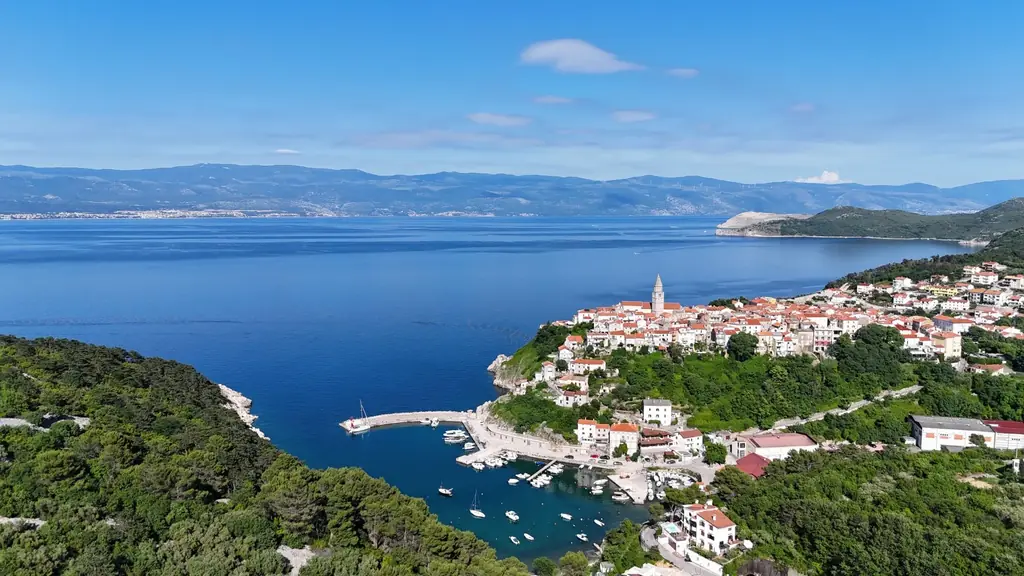
Medieval town on a limestone outcrop about 50 m above the sea (887 residents in 2021), centre of Žlahtina wine and of Glagolitic culture - its statute of 1388 is one of Croatia's key legal texts. Best at: evening strolls through lanes to viewpoints, wine cellars, and small free summer concerts.
Our tips
- Walk from Placa Vrbničkog statuta along Potočina and through Klančić to Opjica square for the view to the mainland.
- Free 'Srijedom u Vrbniku' concerts on Wednesday evenings in July–August (2025 programme), moving between squares and beaches.
- Summer brings coach wine tours; come after they leave (early evening).
- The largest car park is below the southern end of town.
Good to know
- Main square packed during festivals.
- Steep lanes - not for strollers.
- Where
- Vrbnik (east coast)
- Season
- All year; fewer restaurants open off-season
- Best time
- Early evening; September and May–June for quiet
- Getting there
- Car; park below the old town
- Good for
- couples, foodies, families
- Village guide
- Vrbnik
Open on The Krk Map Directions in Google Maps · Apple Maps
Facts checked 31 Oct 2026
Košljun island Franciscan monastery and museums
Sight · Punat bay
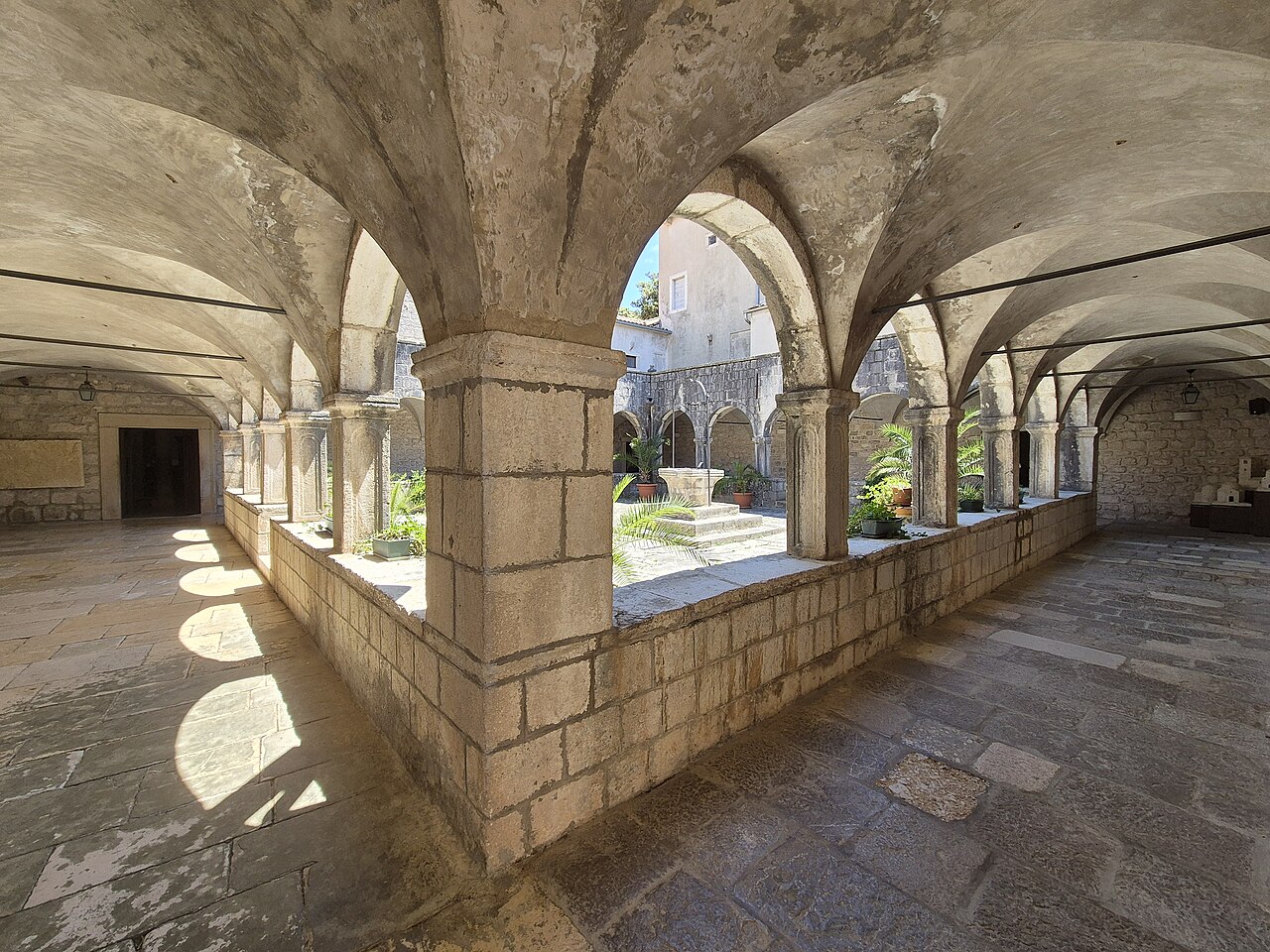
A wooded islet in Punat bay with a Franciscan friary (from 1447), run today by four friars.
Košljun island Franciscan monastery and museums: tips, how to get there and what to know →
Krk Town
Sight · Krk Town
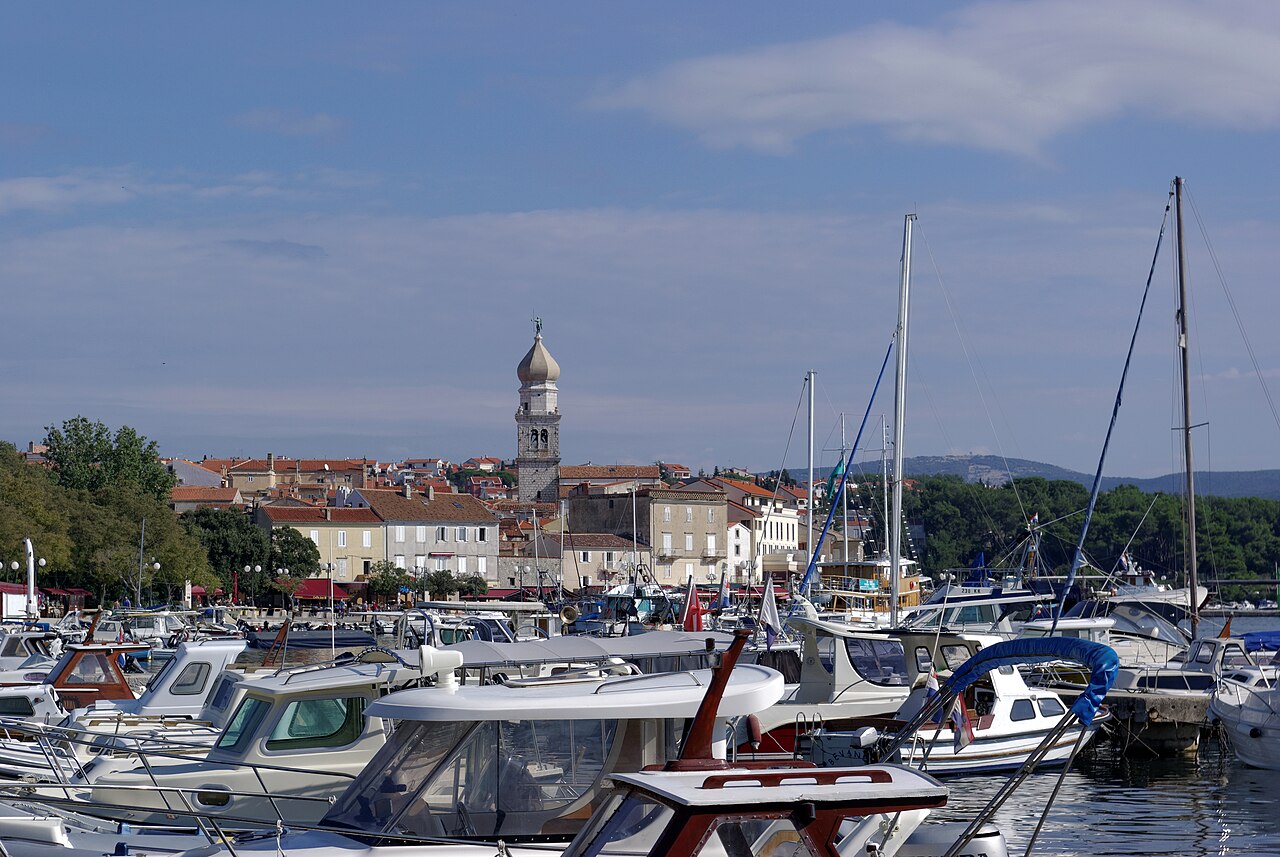
The island capital: Roman and medieval walls, Kamplin Square with its castle and cathedral, and a maze of lanes. Best at: history within five minutes' walk, evening passeggiata on the riva, and the August fair.
Our tips
- Visit early morning or late afternoon; the low sun turns the stone golden.
- On Tuesday evenings in summer, Triola on Kamplin Square brings traditional music, tanac dancing and klapa.
Good to know
- Crowded midday in July–August.
- Where
- Krk Town
- Season
- All year; Advent market in December
- Best time
- Late afternoon into evening
- Getting there
- Car; paid parking outside the walls
- Good for
- couples, families, kids, groups
- Village guide
- Krk Town
Open on The Krk Map Directions in Google Maps · Apple Maps
Facts checked 31 Oct 2026
St Lucy's church, Jurandvor - home of the Baška tablet
Sight · Jurandvor, Baška valley
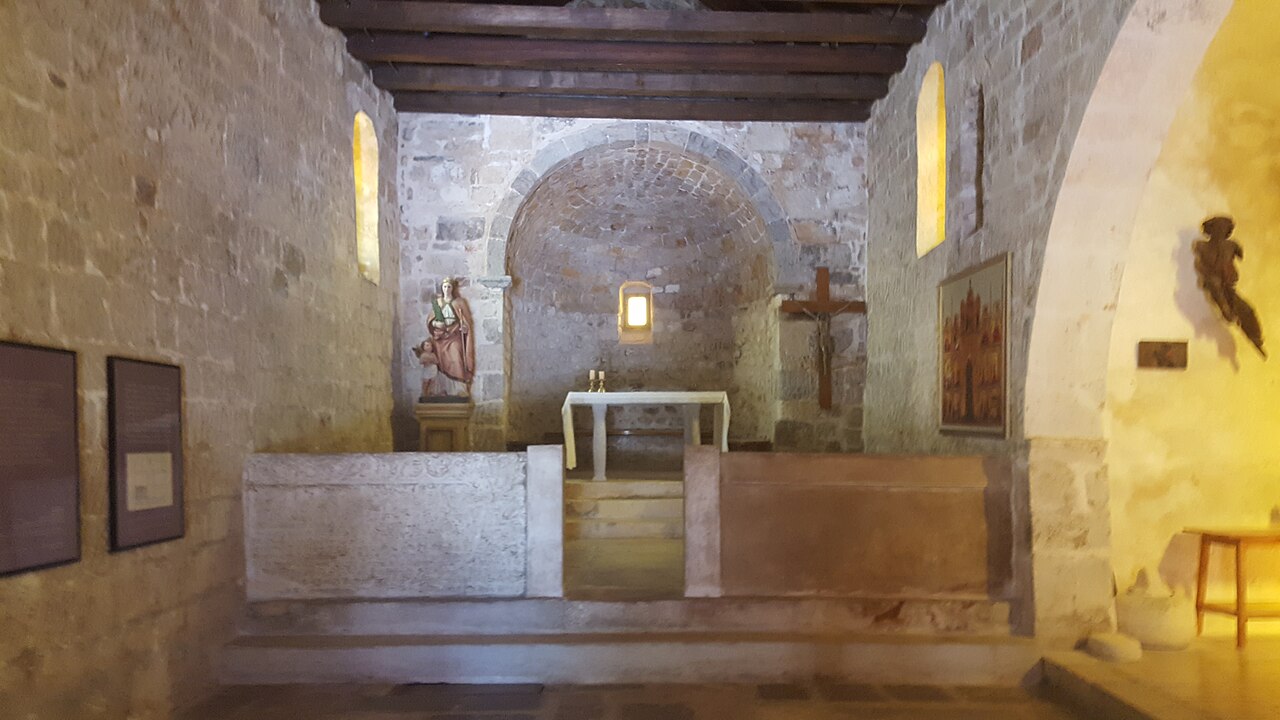
The Romanesque church where the Baška tablet was found in 1851: a white limestone slab of about 1100, carved in Glagolitic script, that records King…
Frankopan Castle (Kaštel), Krk Town
Sight · Krk Town
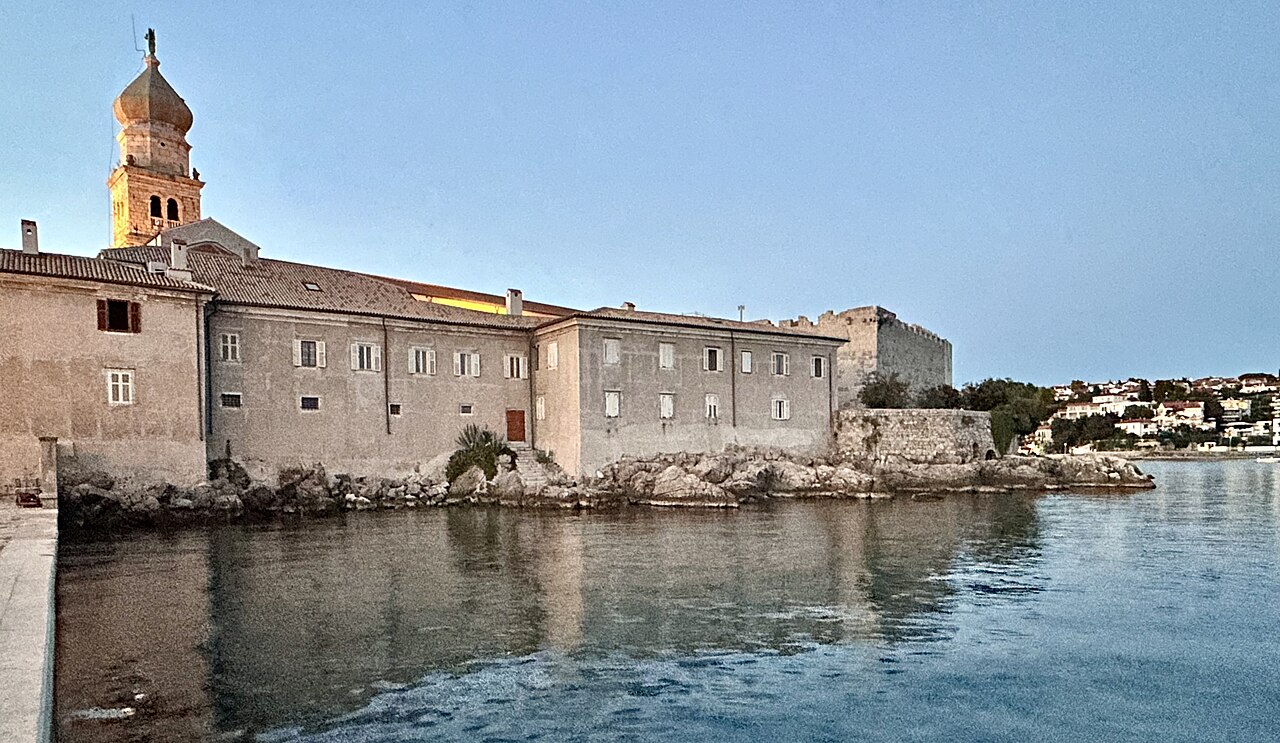
Seat of the Frankopan counts on Kamplin Square next to the cathedral.
Biserujka cave
Sight · Rudine / north-east
Tested by us We have been here ourselves.
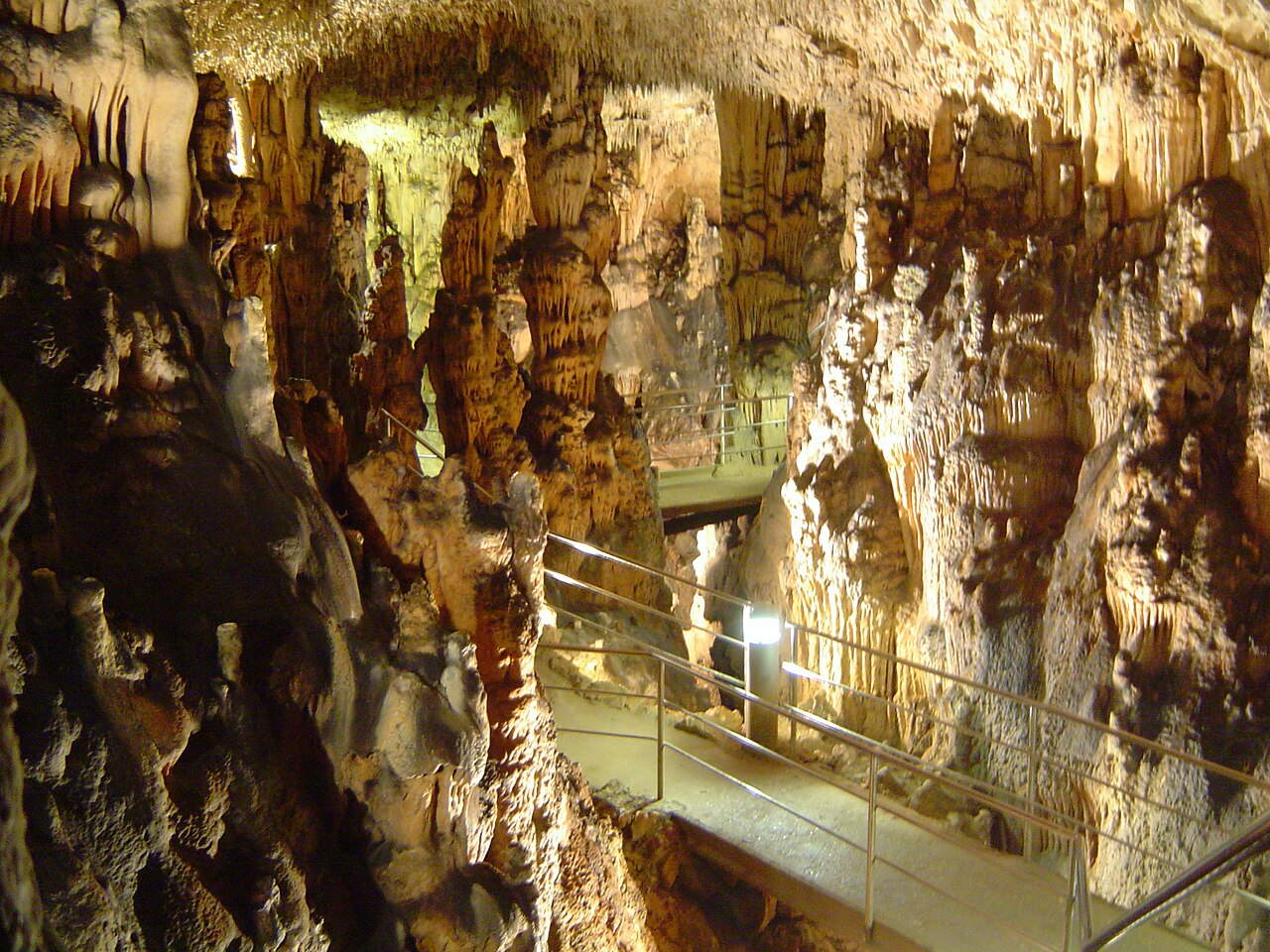
A small show cave near Rudine, open to visitors since 1998: about 110 m of passages some 12 m below ground, with stalactites, calcite columns and soot left by early visitors' torches. It stays cool all year (about 13–15 °C), which makes it a good hot-day or rainy-day outing for families.
Our tips
- Guided groups go in about every 20 minutes and the tour inside takes 15–20 minutes. With the wait and the trail, plan about an hour.
- A 30-minute educational trail starts at the cave; for a swim afterwards, drive on to Soline or Klimno.
- Bring a light jumper.
- No shop or café at the cave: bring water.
Good to know
- Entry EUR 7 adults, EUR 5 children 3–12, under 3 free (2026).
- Closed Nov–Mar.
- Where
- Rudine / north-east
- Phone
- +385 98 211 630
- Season
- Apr and Oct 10:00–15:00; May–Jun 09:00–17:00; Jul–Aug 09:00–18:00; Sep 10:00–17:00
- Open
- April–October
- Best time
- Hot midday or a rainy day; outside July and August to avoid the queue
- Getting there
- Car to Rudine; parking at the cave
- Good for
- kids, families, rainy day
- Village guide
- Rudine and Biserujka cave
Open on The Krk Map Directions in Google Maps · Apple Maps
Facts checked 31 Oct 2026
Dolovo - the abandoned village in the forest
Sight · Kras / Dobrinj
A stone hamlet in the forest between Kras and Gostinjac, first recorded in 1780 and abandoned in the 1970s. An easy marked forest path leads down to overgrown houses where stairs, window frames and household objects are still visible: a quiet, moving look at how Krk's inland villages emptied.
Our tips
- Combine with the Vela gromača mound and the village of Kras.
Good to know
- Do not enter the houses - they are dilapidated.
- Ticks possible in the grass.
- Where
- Kras / Dobrinj
- Season
- Open-air, all year
- Best time
- Spring or autumn; on summer mornings the shade makes it bearable
- Getting there
- Car to the small gravel parking at the 'Dolovo' sign, then an easy marked forest walk
- Good for
- couples, families, kids, dogs
- Village guide
- Dobrinj and the north-east interior (Kras, Dolovo, Vela gromača, Sveti Vid, Gabonjin)
Open on The Krk Map Directions in Google Maps · Apple Maps
Facts checked 31 Oct 2026
Klančić lane and Opjica square, Vrbnik
Sight · Vrbnik
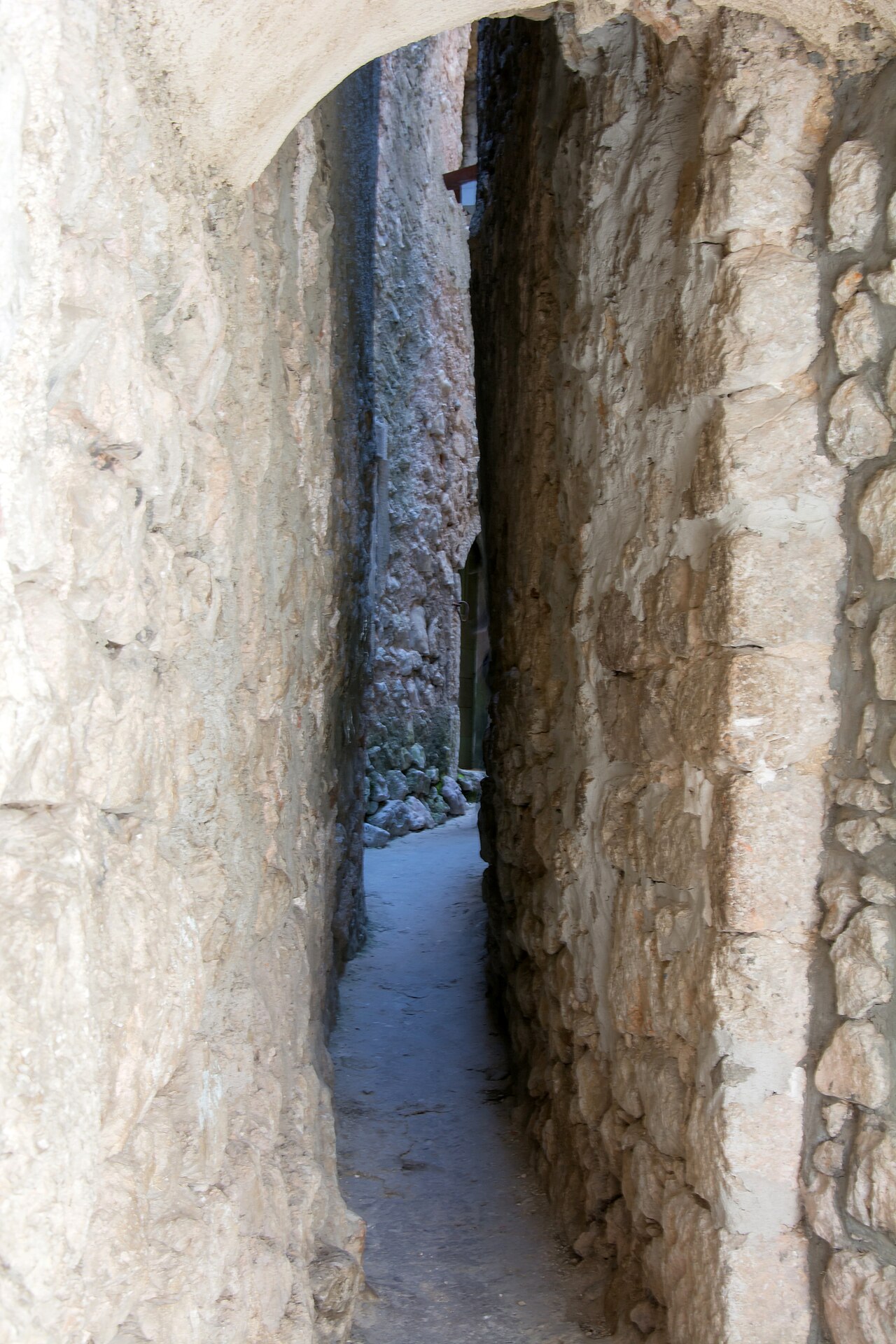
Vrbnik's best-known lane, only about 43 cm wide at its narrowest point. The better reason to go: it is a through-passage to little Opjica square, with views over the walls and across to Crikvenica and Novi Vinodolski.
Our tips
- Route: from Placa Vrbničkog statuta take Potočina street (butcher's on the left corner), pass the small Dverčić gate, and Klančić opens on your left.
- Keep going through to Opjica rather than turning back after the photo.
- Local lore says a girl who could not squeeze through would not find a husband.
Good to know
- Busy with photographers in high season.
- Where
- Vrbnik
- Season
- Always open
- Best time
- Early morning or after 19:00 in summer
- Getting there
- Walk in Vrbnik old town; park in the lots below town
- Good for
- couples, families, kids
- Village guide
- Vrbnik
Open on The Krk Map Directions in Google Maps · Apple Maps
Facts checked 1 Nov 2026
Dobrinj
Sight · Dobrinj (north-east)
A car-free hilltop village about 200 m up, above Soline bay, with only about 89 residents (2021) but two small collections, a free summer gallery and a strong folk tradition. Best at: quiet atmosphere, views and a slow lunch.
Our tips
- Holy Trinity church on the square has paintings of hell, purgatory and paradise above the altar.
- Locals speak a very archaic dialect ('čokavica'); a 2026 book retells classic children's stories in it.
- At Konoba Zora, order the šurlice with goulash.
Good to know
- Very quiet off-season.
- Where
- Dobrinj (north-east)
- Season
- Collections in summer; off-season by phone to the municipality
- Best time
- Late afternoon into dinner
- Getting there
- Car; park below the core
- Good for
- couples, families, foodies
- Village guide
- Dobrinj and the north-east interior (Kras, Dolovo, Vela gromača, Sveti Vid, Gabonjin)
Open on The Krk Map Directions in Google Maps · Apple Maps
Facts checked 31 Oct 2026
Krk Cathedral, St Quirinus and the treasury
Sight · Krk Town
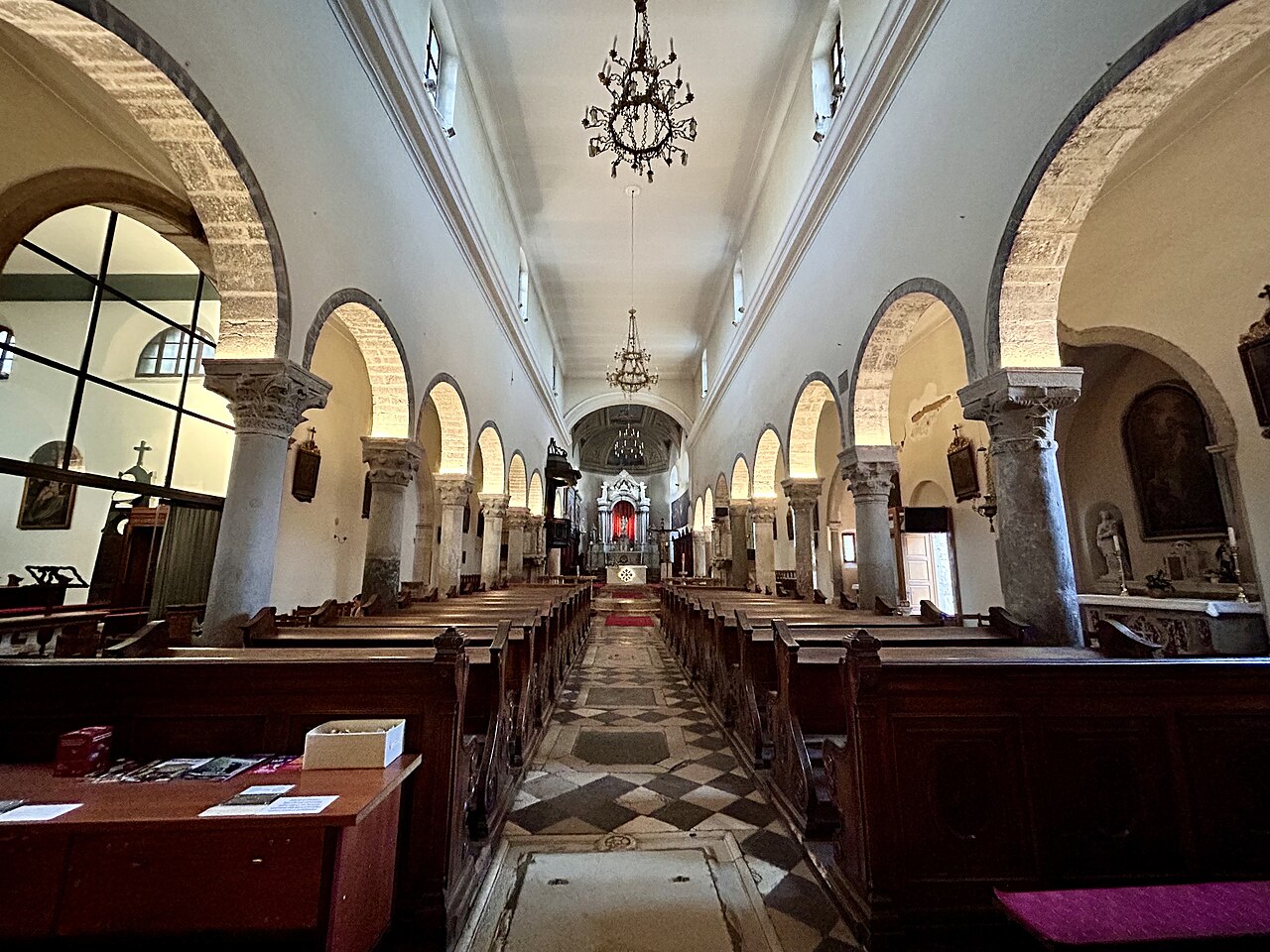
Three linked buildings: the cathedral, built on a 5th-century basilica; the rare two-storey Romanesque church of St Quirinus (upper) and St Margaret (lower), which now houses the treasury; and the 1515 bell tower, whose onion-style top was added in the 18th century.
Our tips
- The treasury's highlight is the gilded silver Frankopan altarpiece of 1477 (Virgin Mary) by master Paulus Kohler.
- Look down: the tomb of Ludovico Cicuta, galley commander at the Battle of Lepanto (1571), is set in the cathedral floor.
- The organ in the choir loft came from the Callido workshop in Venice in 1815.
Good to know
- Dress modestly (active church).
- Where
- Krk Town
- Season
- Treasury hours and entry vary - ask at the cathedral
- Best time
- Morning before tour groups; pair with the castle next door
- Getting there
- Kamplin Square, Krk old town
- Good for
- couples, rainy day
- Village guide
- Krk Town
Open on The Krk Map Directions in Google Maps · Apple Maps
Facts checked 31 Oct 2026
Fulfinum-Mirine Roman town and early Christian basilica
Sight · Omišalj
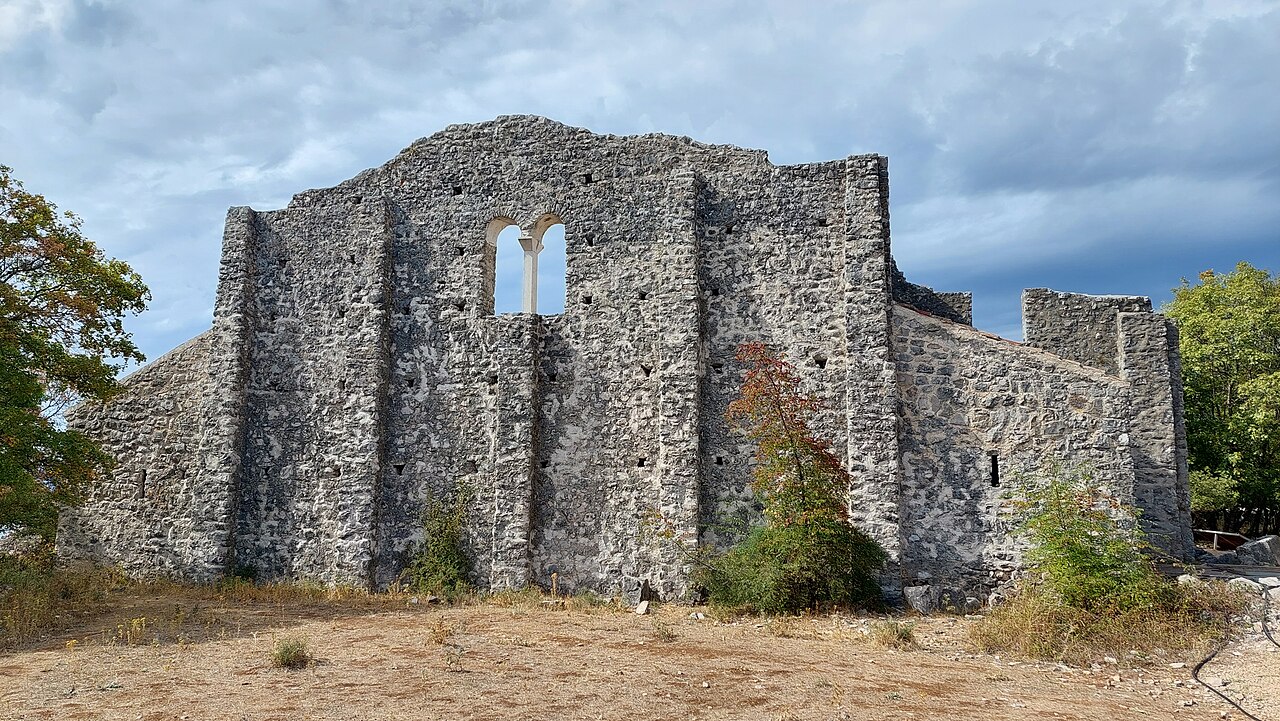
The remains of the Roman town of Fulfinum on the shore below Omišalj (forum, baths, a sarcophagus) and the large 5th-century basilica of Mirine. Free entry. Since May 2026 the site has interactive kiosks, VR headsets and QR codes in Croatian, English, Italian and German, with games for children.
Our tips
- In mid-July the 'Antički dani' (Ancient Days) festival fills the site with more than fifty costumed actors and gladiator fights on two evenings (2026: 17–18 July).
- Scan the QR codes: no app needed.
Good to know
- Little shade.
- The oil terminal across the bay is part of the view.
- Where
- Omišalj
- Season
- Open-air, free (digital features added 2026)
- Best time
- Early evening in summer; spring and autumn
- Getting there
- Car to Omišalj bay; site by the sea
- Good for
- families, kids, couples
- Village guide
- Omišalj, Fulfinum-Mirine and Voz bay
Open on The Krk Map Directions in Google Maps · Apple Maps
Facts checked 31 Oct 2026
Mrgari - flower-shaped sheep pens of the Baška valley
Sight · Baška valley / Draga Bašćanska
Dry-stone sheep-sorting pens found only around Baška: ten on two plateaus of the Baška valley and five on the nearby island of Prvić. A funnel leads sheep into a central yard, and each shepherd's pen opens off it like the petals of a flower. With the domed rainwater cisterns (bunari) of Draga Bašćanska they show Krk's stone culture in the open air.
Our tips
- Easiest to see: 'Mrgari na Lipici', right by the D102 near Draga Bašćanska.
- A bigger set lies on the Starošćina plateau above Baška: a hike, best on a calm, cool morning.
- Shepherds from Baška, Batomalj and Jurandvor used the mrgari.
Good to know
- No shade on the plateaus.
- Private grazing land - close gates, leave walls intact.
- Where
- Baška valley / Draga Bašćanska
- Season
- Open-air
- Best time
- Spring and autumn mornings
- Getting there
- Roadside (Lipica) or hiking (Starošćina)
- Good for
- couples, families, kids
- Village guide
- Baška valley: Treskavac, Draga Bašćanska, Batomalj and Jurandvor
Open on The Krk Map Directions in Google Maps · Apple Maps
Facts checked 31 Oct 2026
Omišalj old town
Sight · Omišalj (north)
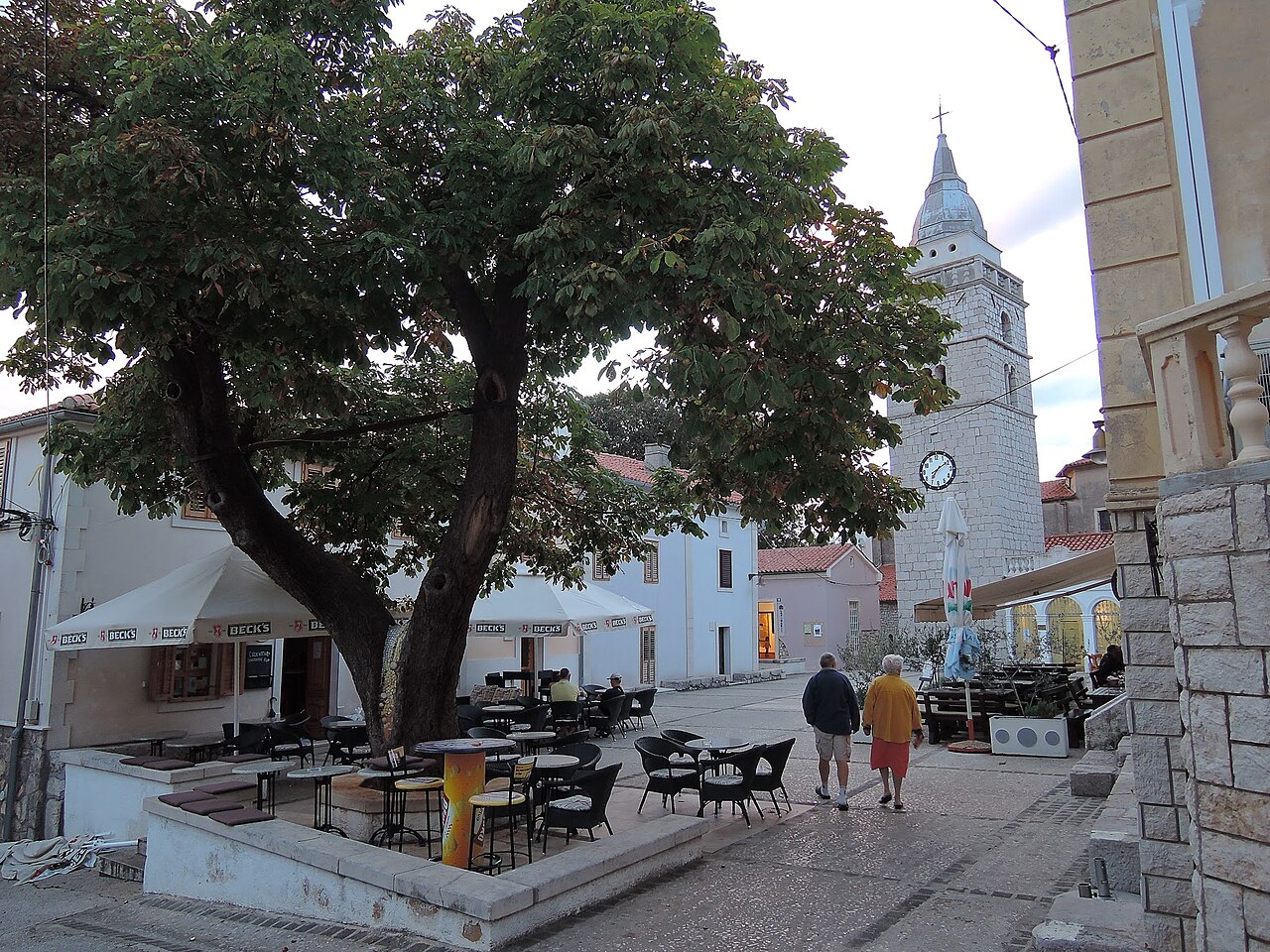
Old town on a cliff about 80 m above its bay, with a Romanesque basilica, Glagolitic inscriptions and viewpoints; Roman Fulfinum lies on the shore below. Best at: a sunset walk to the Vele steni viewpoint and a quiet heritage hour.
Our tips
- The Vele steni viewpoint looks over Omišalj bay, the Fortičina ruins and the Fulfinum site.
- Spomen dom krčkog folklora (Prikešte 20) shows costumes, jewellery and instruments - free entry.
- Handy stop on the way to or from Rijeka airport.
Good to know
- Industrial port and airport nearby shape the views.
- Where
- Omišalj (north)
- Season
- All year
- Best time
- Sunset
- Getting there
- Car; park at the edge of the old town
- Good for
- couples, sunset, families
- Village guide
- Omišalj, Fulfinum-Mirine and Voz bay
Open on The Krk Map Directions in Google Maps · Apple Maps
Facts checked 31 Oct 2026
Porat Franciscan monastery and the Fumak cross
Sight · Porat (Malinska)
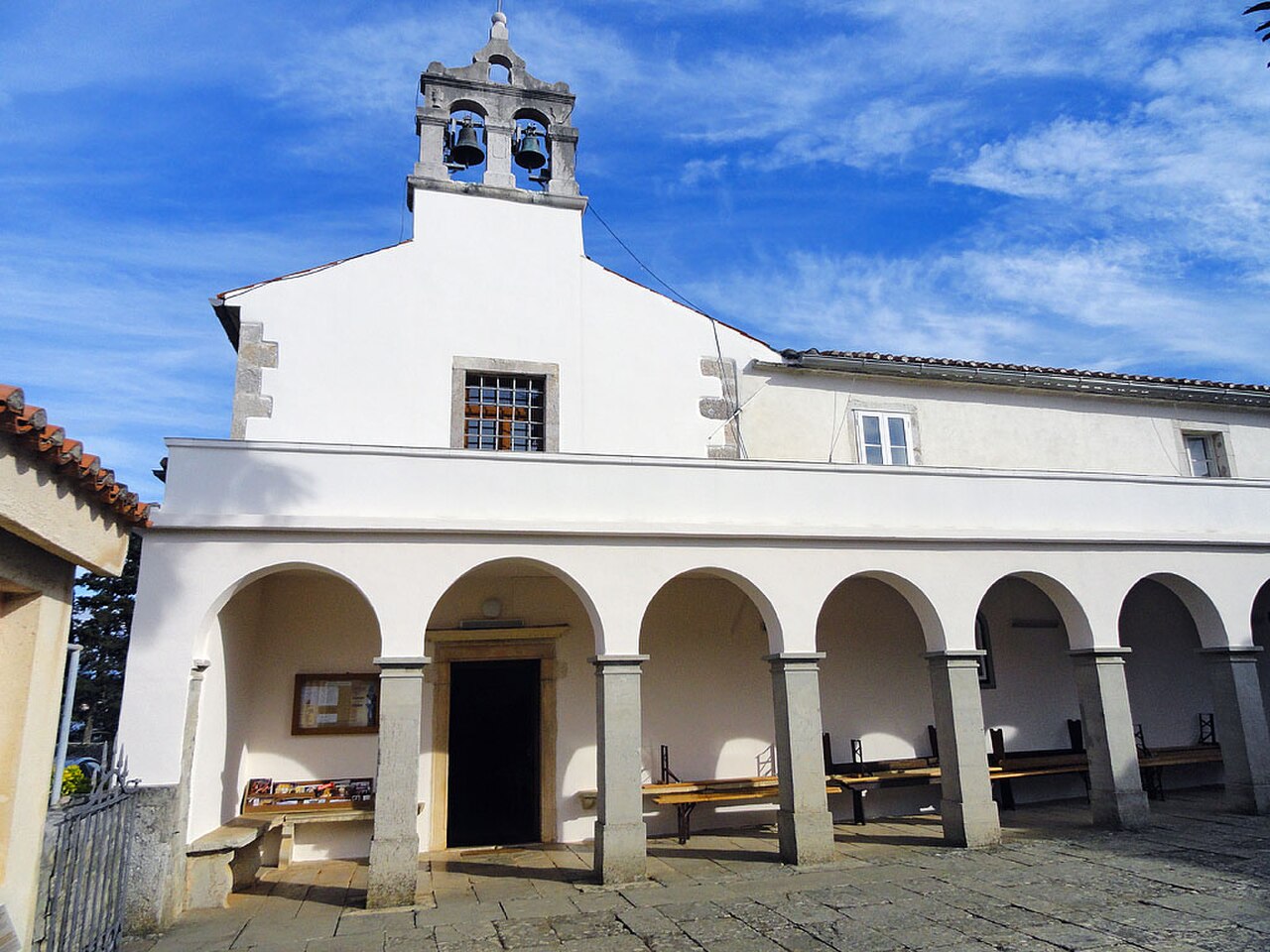
A Franciscan Tertiary friary founded in 1480 on the site of a chapel given by Ivan Frankopan, with a late-Gothic church (consecrated 1557) and a polyptych by the Venetian Santacroce workshop. A museum in the old cellar and olive press (the press of 1850 survives) shows art, everyday objects and copies of the oldest Croatian Glagolitic inscriptions. The atrium hosts classical and traditional concerts.
Our tips
- From Porat a signed 1.5 km walk or bike ride leads to the Fumak votive cross (2000) with views over the Kvarner gulf to Rijeka on clear days.
- Ask whether a concert is scheduled in the courtyard.
- Where
- Porat (Malinska)
- Phone
- +385 51 867 048
- Season
- Museum: phone ahead for opening times (+385 51 867 048)
- Best time
- Summer evening (concert) or late afternoon walk
- Getting there
- Car to Porat; Fumak on foot/bike
- Good for
- couples, families, rainy day
- Village guide
- Malinska, Porat and the Paradise Path
Open on The Krk Map Directions in Google Maps · Apple Maps
Facts checked 31 Oct 2026
Punat olive heritage: Stari toš centre and Galerija Toš
Sight · Punat
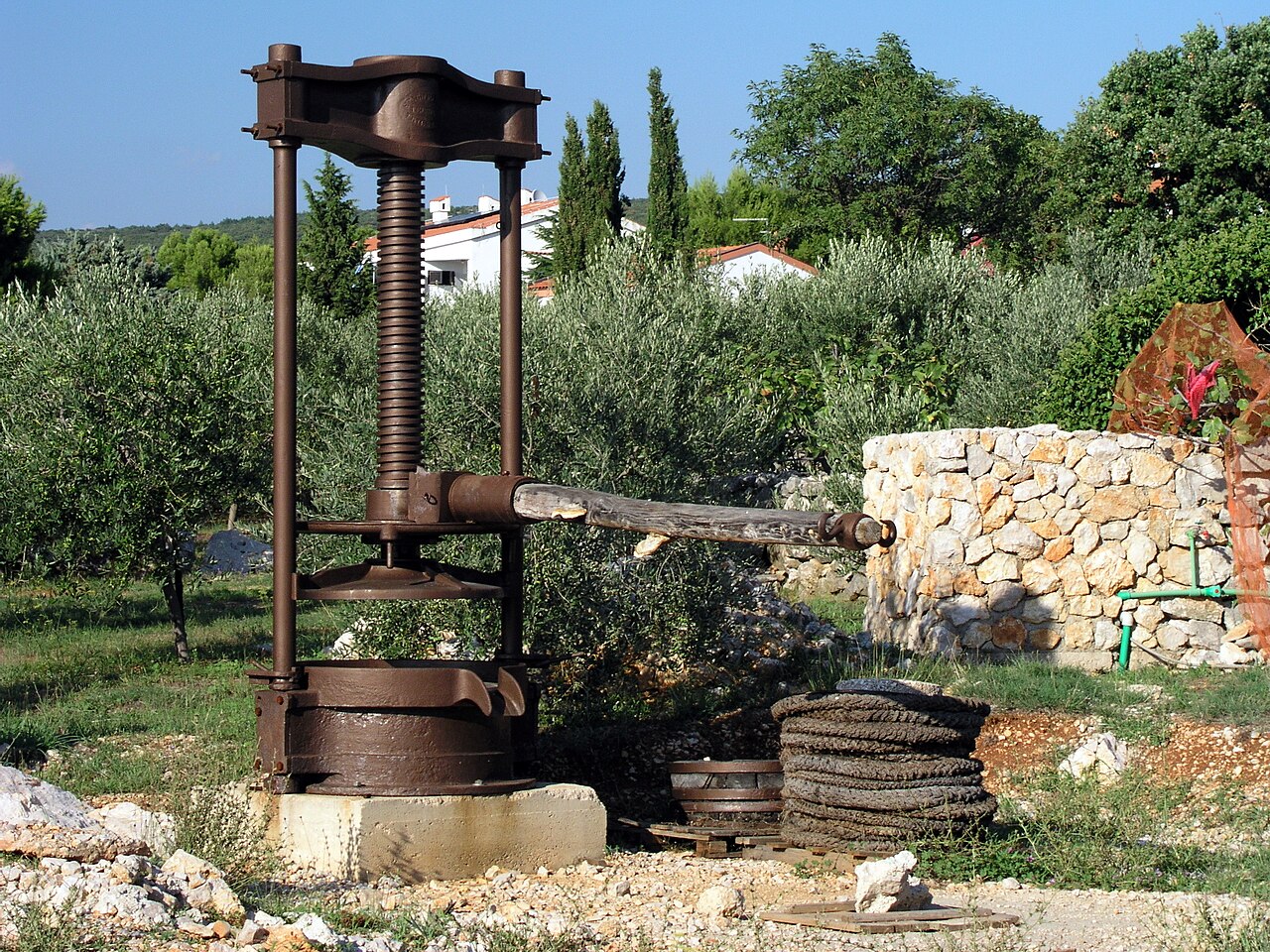
Punat's old core has a well-preserved olive press, now the Stari toš interpretation centre (Stara Placa 1) with interactive panels and archive photos. A second old mill at Klančić 18 is Galerija Toš, which hosts changing art shows and the town's Olive Days each October.
Our tips
- Punat also has a street called Klančić (the gallery address) - do not confuse it with Vrbnik's famous Klančić when using GPS.
- Exhibition openings at Galerija Toš often come with folk music and local food.
Good to know
- Opening hours vary; ask the Punat tourist board.
- Where
- Punat
- Season
- Gallery open evenings during exhibitions
- Open
- June–September
- Best time
- Evening gallery hours in summer; Olive Days in October
- Getting there
- Walk in Punat old centre (Stara Placa)
- Good for
- foodies, rainy day, couples
- Village guide
- Punat and Košljun
Open on The Krk Map Directions in Google Maps · Apple Maps
Facts checked 31 Oct 2026
Vitezić library, printing house and Vrbnik museums
Sight · Vrbnik
The former Count's Palace on Placa Vrbničkog statuta holds the Vitezić family library (19th-century bequest of Bishop Ivan and Dr Dinko Vitezić, about 3,900 titles), a memorial printing house dedicated to the Glagolitic printers Baromić and Parčić, and the Neda Trinajstić ethnographic rooms. The 30 m bell tower of 1527 houses a small museum, and the Desetinec tithe house shows church art and Stone Age finds.
Our tips
- Ask to see the 1718 world atlas by Köhler, one of the library's rarest pieces.
- The library also holds a 1562 Protestant New Testament in Croatian, printed in Glagolitic.
- Legend has it that the bell tower was paid for with treasure from the Gradec fortress.
- Where
- Vrbnik
- Season
- Opening is irregular; phone the Vrbnik tourist board first (+385 51 857 479)
- Best time
- Rainy morning; allow about an hour
- Getting there
- Walk in Vrbnik old town
- Good for
- couples, rainy day, kids
- Village guide
- Vrbnik
Open on The Krk Map Directions in Google Maps · Apple Maps
Facts checked 31 Oct 2026
Baška
Sight · Baška (south-east)
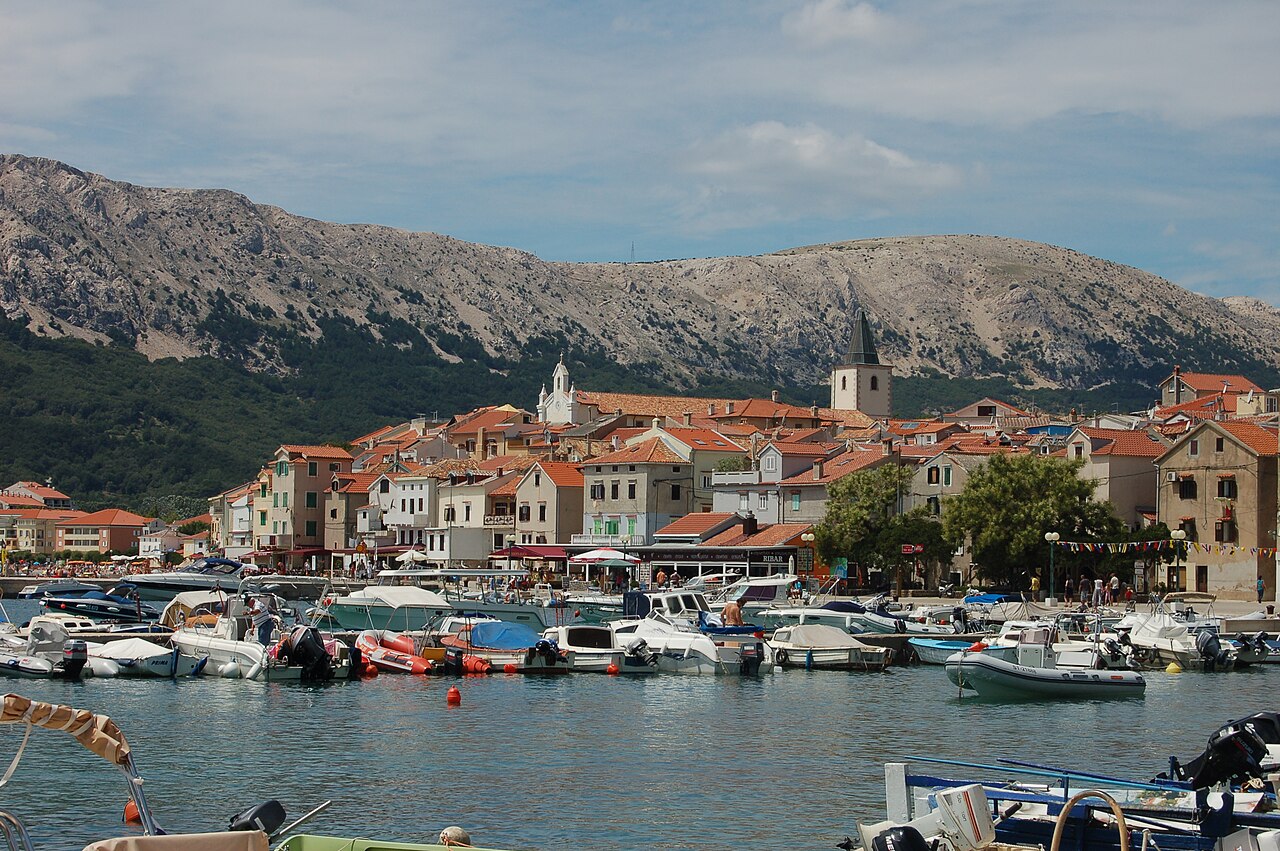
Former fishing village behind the almost 2 km Vela plaža, ringed by bare karst mountains. Best at: lively summer evenings on the Palada and riva, and as a base for the Baška valley's Glagolitic and dry-stone heritage.
Our tips
- Baška remembers Dr Zdenka Čermáková (1884–1968), a Czech doctor, and has long been a Czech favourite.
- Free klapa evenings on the Palada in July–August.
Good to know
- Crowded in peak season.
- Where
- Baška (south-east)
- Season
- Very seasonal; quiet in winter
- Best time
- Evenings; June and September
- Getting there
- Car; paid parking; D102 south from Krk
- Good for
- families, groups, couples
- Village guide
- Baška
Open on The Krk Map Directions in Google Maps · Apple Maps
Facts checked 31 Oct 2026
Corinthia (Korintija-Bosar) Byzantine fort
Sight · Baška (between Vela Luka and Mala Luka)
Ruins of a 6th-century Byzantine fort on a hill about 129 m high between Vela and Mala Luka, with a settlement of three churches and two wells at its foot and the remains of a 16th-century St Nicholas monastery. The short climb from the Vela Luka beach is rough but gives the view into both bays.
Our tips
- Bring water.
- Do it on the walk from Vela Luka to Mala Luka.
Good to know
- Rough, unshaded climb.
- Where
- Baška (between Vela Luka and Mala Luka)
- Season
- Year-round (open site)
- Best time
- Morning
- Getting there
- On foot from Vela Luka beach; rocky, steep. Vela Luka by taxi boat or hike.
- Good for
- couples, walkers, culture
- Village guide
- Baška south-east coves: Bunculuka, Vrženica, Vela Luka and Mala Luka
Open on The Krk Map Directions in Google Maps · Apple Maps
Facts checked 31 Oct 2026
Dobrinj: sacral and ethnographic collections, Galerija Infeld
Sight · Dobrinj
Two small collections and a summer gallery in a car-free hilltop village. The sacral collection in the parish house shows a 15th-century Venetian altar cloth embroidered in gold by Katarina Frankopan, a reliquary of St Ursula and Glagolitic chapter books. The ethnographic collection fills the three-storey birthplace of journalist Ive Sučić. Galerija Infeld, in a restored 19th-century sea captain's house, shows international art for free in summer.
Our tips
- Galerija Infeld opens in summer, from early July to the end of September, 10:00–13:00 and 18:00–22:00, free - an easy evening add-on to dinner in Dobrinj.
- Opposite the gallery, on the square, find the 1738 carved stone face (maskeron); nearby a stone horse head and two stone hollows once used to measure grain and oil tax.
- Where
- Dobrinj
- Season
- Collections: summer months; off-season, phone the municipality (+385 51 848 344, Mon/Wed/Fri 09:00–14:00)
- Best time
- Summer evening (gallery) or a rainy day
- Getting there
- Park below the village; core is car-free
- Good for
- couples, kids, families, rainy day
- Village guide
- Dobrinj and the north-east interior (Kras, Dolovo, Vela gromača, Sveti Vid, Gabonjin)
Open on The Krk Map Directions in Google Maps · Apple Maps
Facts checked 31 Oct 2026
Holy Trinity church and Baška old town
Sight · Baška (old town, Kralja Zvonimira)
The 1723 parish church at the heart of Baška's few old-town lanes, holding a Last Supper attributed to Palma the Younger, a large altarpiece by Franjo Jurić and a rose window. Galerija Zvonimir at the same address shows Croatian and foreign artists from May to October. With St Mark's (1514, on an early Christian double basilica) at the beach end, it makes a 45-minute old-town loop.
Our tips
- Combine with the Palada walk in the evening.
- The local history museum next to the church is temporarily closed (2026).
- Where
- Baška (old town, Kralja Zvonimira)
- Season
- Church year-round (check hours); gallery May–October
- Best time
- Morning or evening
- Getting there
- On foot; on Ulica kralja Zvonimira in the pedestrian centre.
- Good for
- couples, rainy day, culture
- Village guide
- Baška
Open on The Krk Map Directions in Google Maps · Apple Maps
Facts checked 31 Oct 2026
Punat
Sight · Punat
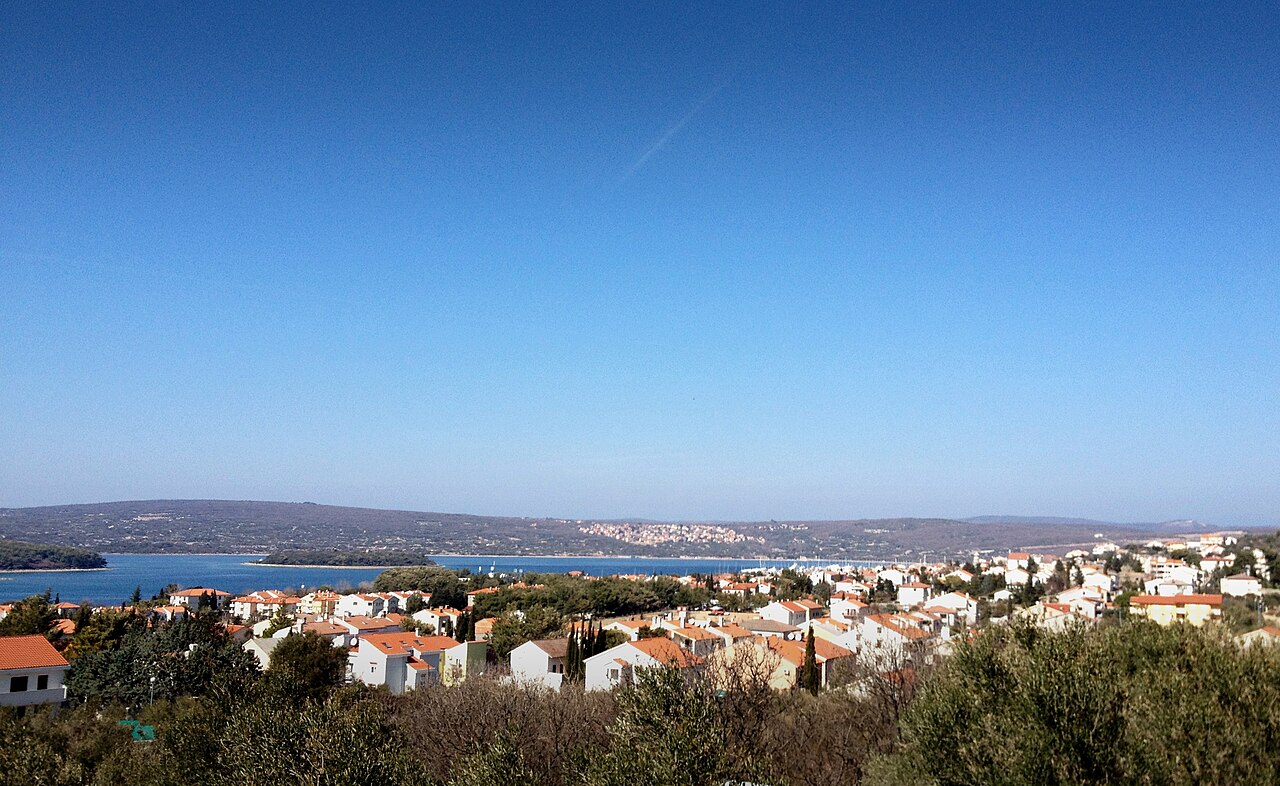
Town on the sheltered Puntarska draga, gateway to Košljun and home of a big marina. Best at: olive heritage in the old core (Stari toš, Galerija Toš), the Košljun boat, and October's Olive Days.
Our tips
- The old core around Stara Placa is two minutes from the harbour: worth a look before or after the Košljun boat.
- The first weekend of August is fishermen's weekend on the riva (2026: 1–2 August).
- Where
- Punat
- Season
- All year
- Best time
- Morning (boats, fish market) or evening riva
- Getting there
- Car; paid parking at the harbour
- Good for
- families, couples, foodies
- Village guide
- Punat and Košljun
Open on The Krk Map Directions in Google Maps · Apple Maps
Facts checked 1 Nov 2026
St Donatus church at the head of Punat bay
Sight · Kornić / Punat bay
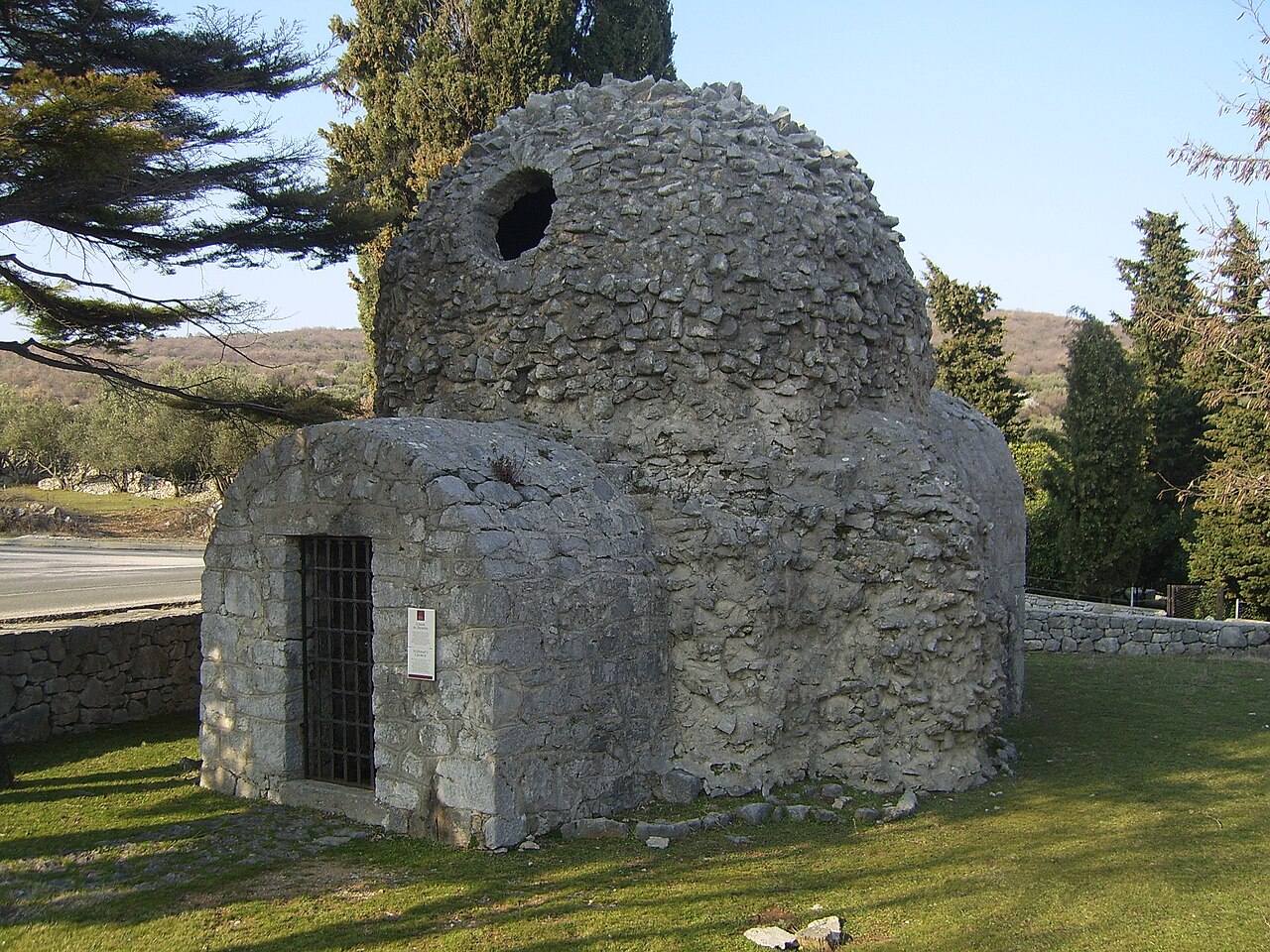
An early medieval church right beside the main road at the innermost point of Puntarska draga, easy to drive past without noticing.
Our tips
- There is a bus stop called 'Dunat' next to it - use that as your landmark and pull off carefully.
- It has lost its outer stone facing, so it looks modest; the interest is in the plan and age, not decoration.
Good to know
- Fast traffic on the D102: take care when stopping.
- Where
- Kornić / Punat bay
- Season
- Seen from outside, any time
- Best time
- Any time; 10-minute stop on the way between Krk Town and Punat
- Getting there
- By car on the road from Krk towards Punat, at the head of Punat bay; the church is a few steps from the roadside
- Good for
- couples
- Village guide
- Kornić and the head of Punat bay (Sv. Dunat)
Open on The Krk Map Directions in Google Maps · Apple Maps
Facts checked 31 Oct 2026
St George church ruins at Mala Krasa
Sight · Punat (south shore, towards Konobe)
On the shore path south of Punat, about 2.5 km from town, stand four tall walls and the apse of the Romanesque church of St George (12th-13th century). It was built over a late antique building that became a church in the 6th century, and old graves were found around it.
Our tips
- Combine with a swim at the Mala Krasa coves.
- The shore path from Punat is mostly shaded: good even in summer.
Good to know
- Open ruin, no facilities.
- Where
- Punat (south shore, towards Konobe)
- Season
- Year-round (open ruin)
- Best time
- Morning or late afternoon
- Getting there
- On foot along the shore path from Punat's southern promenade
- Good for
- families, walkers, culture
- Village guide
- Punat and Košljun
Open on The Krk Map Directions in Google Maps · Apple Maps
Facts checked 31 Oct 2026
Stara Baška
Sight · Stara Baška
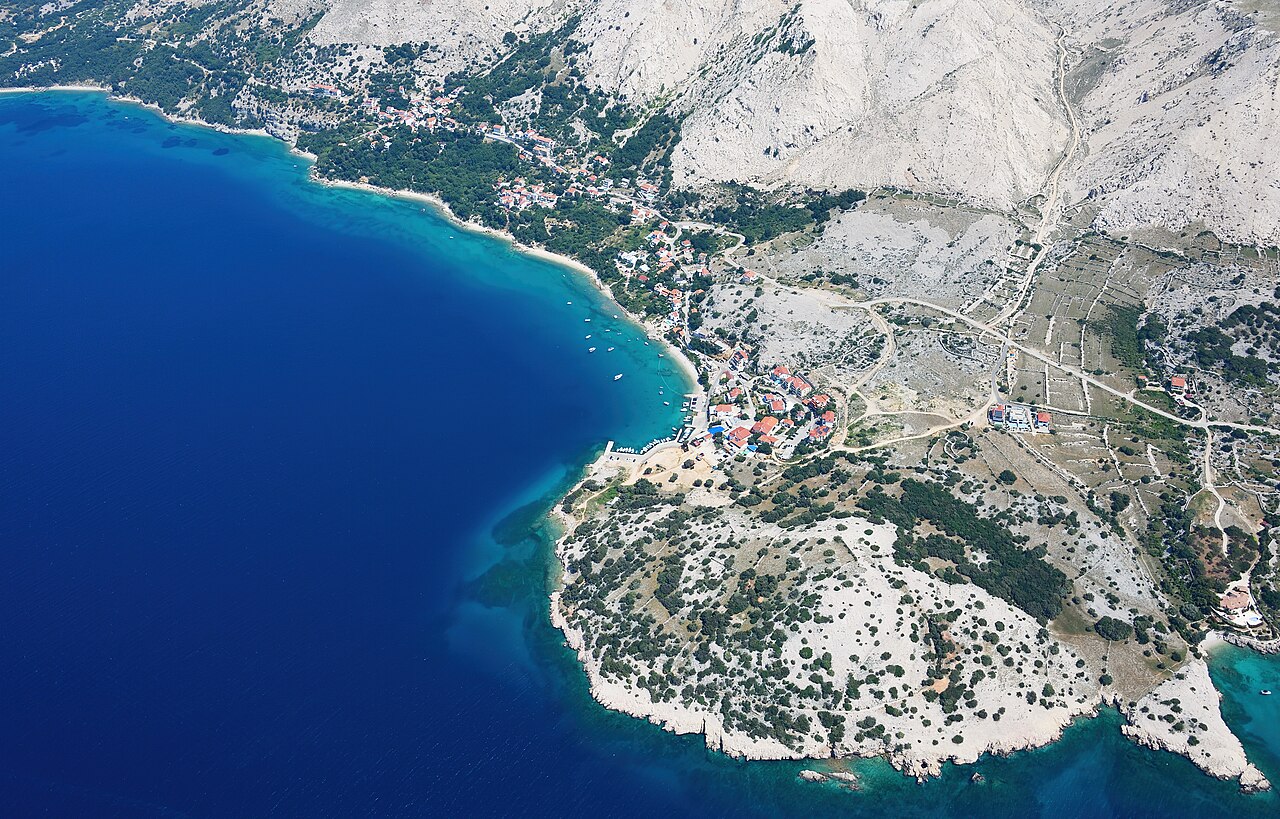
A shepherds' village founded in the 14th century by refugees, squeezed between hills and a deep bay on the south-west coast. Best at: peace, coves, and short walks: up to the cemetery hill, or along the path to Zala past the old church of St Jerome.
Our tips
- On the road from Punat you pass below Mali and Veli Kaslir, two Illyrian hillforts - a story for the drive.
- Cape Negrit, south of Punat, holds the ruins of a 13th-century church of St Nicholas.
Good to know
- One access road - slow in peak traffic.
- Where
- Stara Baška
- Season
- Seasonal village
- Best time
- All day, but especially evenings
- Getting there
- Single winding road from Punat
- Good for
- couples, families
- Village guide
- Stara Baška
Open on The Krk Map Directions in Google Maps · Apple Maps
Facts checked 31 Oct 2026
Šilo harbour boards and the tunera on Punta Šilo
Sight · Šilo (harbour and Punta Šilo)
A wooden tuna lookout post with a ladder leaning over the sea stands on the cape that closes Šilo's cove, a relic of Kvarner tuna fishing; a dog-friendly beach lies beside it. On the harbour a set of boards tells the village's sea history: the 1905 steamship company, the steamer 'Dinko Vitezić', and the wooden car ferry 'Bodulka' of 1959.
Our tips
- Walk out along the coast from the centre in the late afternoon.
- Come on 16 August for St Roch's day, with the old migavica net-pulling.
- Where
- Šilo (harbour and Punta Šilo)
- Season
- Year-round (open-air)
- Best time
- Late afternoon
- Getting there
- On foot from Šilo centre; small free lot near the cape
- Good for
- families, kids, dogs, history lovers
- Village guide
- Šilo
Open on The Krk Map Directions in Google Maps · Apple Maps
Facts checked 31 Oct 2026
Buymer fishing museum and tunera, Vela Luka
Sight · Baška (Vela Luka bay)
A tiny museum in a fishermen's hut in Vela Luka bay, with traditional fishing tools, boat gear and finds from the surrounding sea. Beside it stands a tunera, the tall ladder-lookout from which Kvarner fishermen watched for tuna. It is run by the local Buymer association and turns a beach day into a small lesson in local fishing life.
Our tips
- Combine with the climb to Corinthia above the bay.
Good to know
- During Baška's Fishermen's Days in early August a boat trip runs out to it (2026).
- Where
- Baška (Vela Luka bay)
- Season
- Irregular opening
- Best time
- Late morning
- Getting there
- Taxi boat to Vela Luka, then a short walk along the bay.
- Good for
- families, kids, culture
- Village guide
- Baška south-east coves: Bunculuka, Vrženica, Vela Luka and Mala Luka
Open on The Krk Map Directions in Google Maps · Apple Maps
Facts checked 31 Oct 2026
Glavotok: monastery harbour, forest chapel and wild rocky coves
Sight · Glavotok / Brzac / Milohnići (west coast)
A quiet corner of the west coast: a 15th-century Franciscan monastery with its own little harbour, a century-old holm-oak forest ringed by dry-stone walls, wild rocky snorkelling coves (Brzac, Fabich, Marina) and, in the woods near the coves, the chapel of Sv. Krševan.
Our tips
- Late May is when the forest blooms.
Good to know
- Few services.
- Rocky entries: water shoes.
- Where
- Glavotok / Brzac / Milohnići (west coast)
- Season
- Year-round; bars summer only
- Best time
- Sunset; late May
- Getting there
- Car via Milohnići
- Good for
- couples, snorkelling, sunset, dogs
- Village guide
- The wild west coast: Glavotok, Brzac, Linardići and Pinezići
Open on The Krk Map Directions in Google Maps · Apple Maps
Facts checked 31 Oct 2026
St James parish church, Kornić: the end of the Camino Krk
Sight · Kornić (Placa)
The parish church on Kornić's small square is the finish of the Camino Krk, the island's 150 km, seven-stage pilgrim route; the last stage runs 21.4 km from Baška via Jurandvor, Batomalj and Punat. The square also has a café, a konoba and a free water tap, and the shaded trim trail to St Donatus starts here.
Our tips
- Morning: burek from Pekara Ilirija and a coffee on the square.
- Where
- Kornić (Placa)
- Season
- Year-round; the church is not always open
- Best time
- Morning
- Getting there
- Car to Kornić, free parking by the square
- Good for
- walkers, culture, couples
- Village guide
- Kornić and the head of Punat bay (Sv. Dunat)
Open on The Krk Map Directions in Google Maps · Apple Maps
Facts checked 31 Oct 2026
Curated by Benjamin Haller and our guests · Facts checked 1 Nov 2026 · How this map is made
The Krk Map is made by Marim Luxury Villas, a family company that hosts guests in Stara Baška and Vrbnik. No place pays to be on it; partners and our curators’ own offers are marked. Our villas