

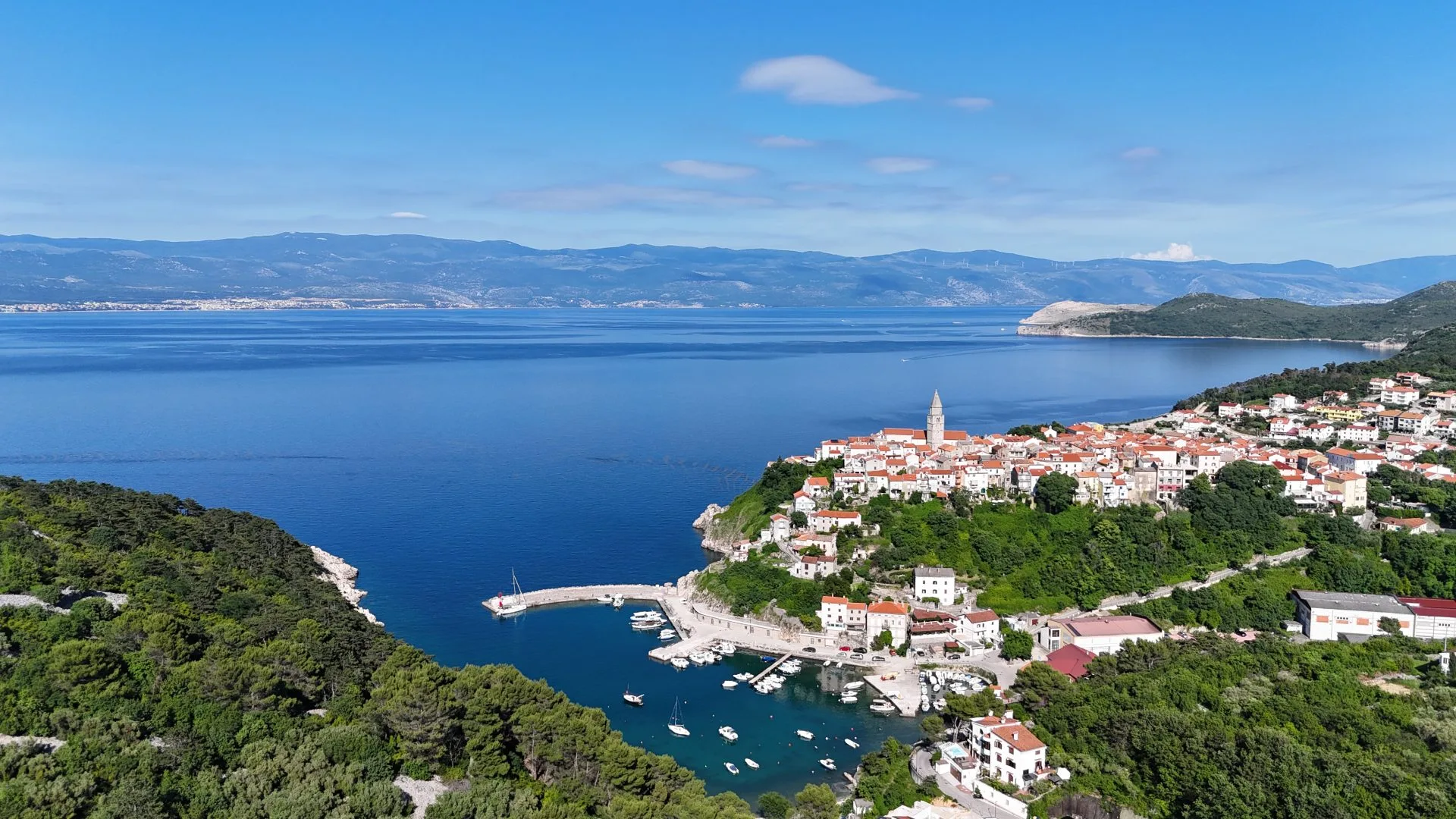
For two days in late August, Vrbnik stops being a quiet wine village on a cliff and becomes the capital of its own grape. Dani vina Vrbnik — Vrbnik Wine Days — is an event on Krk worth planning an August stay around. Here is what happens, how it works, and why staying eight minutes away on foot changes the whole experience.
What Dani vina Vrbnik is
The festival is Vrbnik celebrating Žlahtina, the white grape grown in the valley behind the village for generations. In 2026 the festival reached its twentieth edition. The setting is the village itself: the main square, Trg Škujica, and the Placa fill with the tables of the producers, the streets behind them stay open late, and the cellars in the lanes open their doors.
It is not a trade show and it is not a party imported from somewhere else. The winemakers pouring are the families whose vineyards you drive past on the way in, and half the people at the tables are their neighbours. That is what makes it worth building a week around.
The programme, day by day
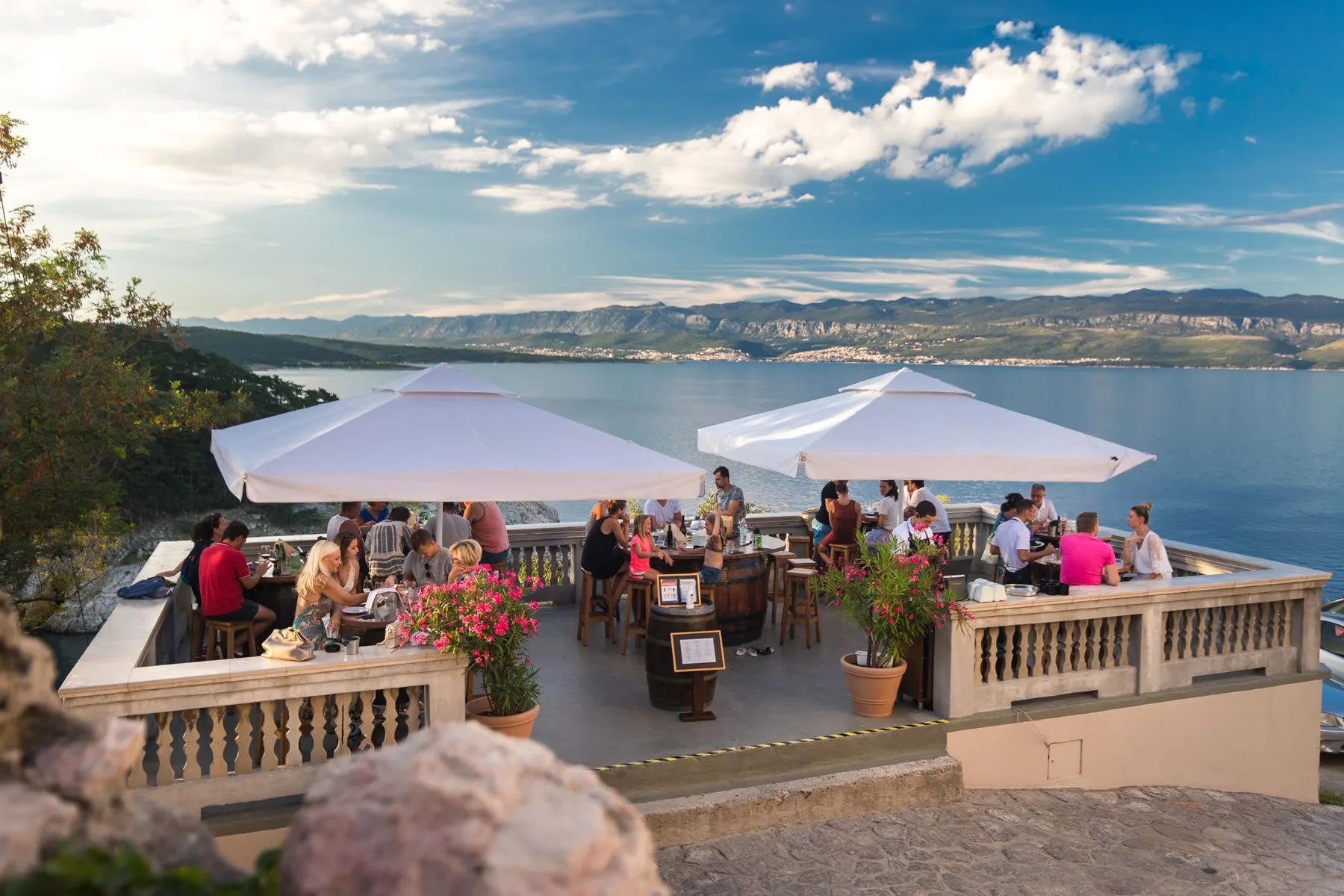
Friday. In 2026 the highlight for wine lovers was a sommelier-led tasting of 14 Kvarner wines at Vinotel Gospoja in the late afternoon (registration needed). From seven in the evening the wine fair opens on the square: a dozen or more producers from Vrbnik and invited guests from other Croatian regions pour by the glass and the restaurants set up food. Then come concerts — traditional klapa singing first, bands later — that run well past midnight.
Saturday. The Vrbnik Wine Walk leaves at nine in the morning: a guided route on foot through six wineries in and around the village, with a tasting at each — in 2026 the Katunar estate winery, the PZ Vrbnik cooperative, Ivan Katunar House of Wine, Gospoja, Nada and Šipun. Places are limited and registration is required, and they go quickly. In the evening the fair reopens on the square and the concerts continue until late.
Most of it is free. You pay for what you drink and eat at the stands; the guided tastings and the Wine Walk are ticketed.
Who pours
The names on the tables are the names on the cellar doors around Vrbnik. The two Katunar wineries: Katunar Estate on the road into the village, where we buy the welcome wine for the villas, and Kuća vina Ivan Katunar (Ivan Katunar House of Wine) in the village. The village cooperative, PZ Vrbnik, founded in 1904, and Gospoja, the winery the Toljanić and Brusić families founded in 1995. Nada, restaurant and winery in one, on the edge of the old town. And Šipun, a small winery bringing near-forgotten Kvarner grapes back into production.
Žlahtina in five sentences
Žlahtina is an indigenous white grape grown mostly in the Vrbnik field, the flat valley behind the village. Eight producers are registered for Vrbnička Žlahtina, from the village cooperative to small family cellars. Besides the Vrbnik cellars, you will find it in shops in Krk town and Baška. It is dry, fresh and mineral, made to be drunk young and cold, and it belongs next to Adriatic fish or a plate of Krk šurlice with seafood. Our Žlahtina guide covers the cellars, the tastings and how to take bottles home.
How to do the festival well
- Arrive on the Thursday. The village is still calm, the pool is waiting, and you wake up on Friday already there.
- Book the Wine Walk the day registration opens. Tell us you want to do it and we send you the link as soon as the tourist board publishes it.
- Friday evening on the square. Eat from the stands rather than booking a restaurant; the point is to move between tables.
- Saturday is the Wine Walk. In 2026 it ran from a 9:00 breakfast to about 18:30, so save the beach below the old town for Sunday.
- Sunday is for the wine valley. Take the Vespa (at Villa Moana) or the car through the vineyards you tasted the night before — our Vespa routes from Vrbnik include the loop.
- Buy at the cellar, not the fair. Ask the producer whether they can deliver or pack bottles for the drive home.
Staying eight minutes away
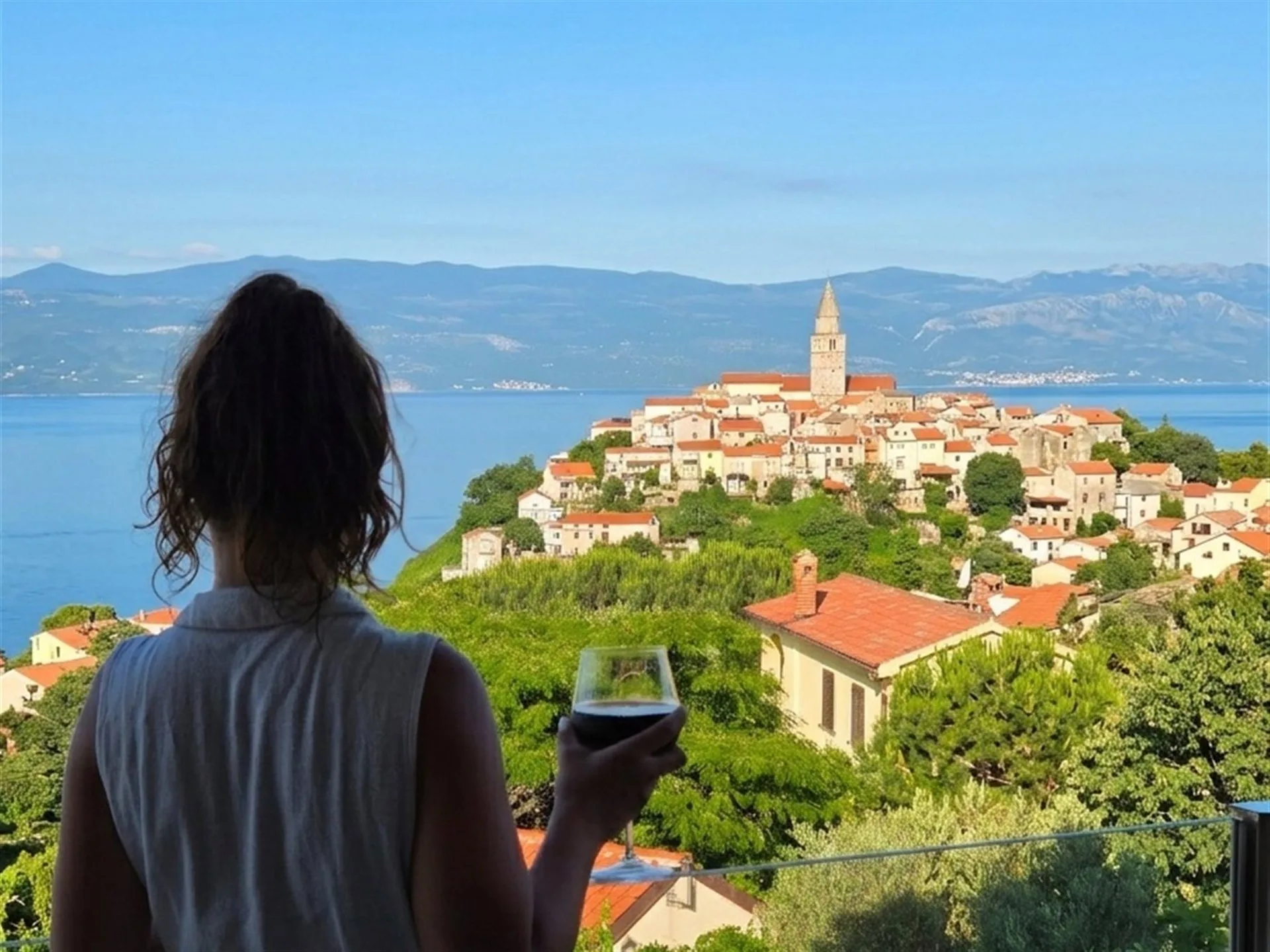
This is where the villas change the experience. Villa Moana and Villa Manatis — Moana in its olive grove, Manatis next door among olive trees — stand on the edge of Vrbnik, about eight minutes on foot from the old town. You walk down to the square, you walk back up under the stars, and nobody thinks about car keys. In the morning you are in your own pool while the village sleeps in. For a group of friends coming for the festival, the two villas together as the Estate sleep fourteen.
One honest warning: August is our busiest month and the festival weekend is booked earliest of all. If Dani vina Vrbnik is the plan, check the dates as soon as you know them — and if 2027 is already tight, write to us and we will tell you what is realistic.
Frequently asked questions
When is the Vrbnik wine festival?
Dani vina Vrbnik takes place every year on a Friday and Saturday in the second half of August. The 20th edition was held on 21 and 22 August 2026. The Vrbnik tourist board publishes the exact dates and the programme in early summer — ask us and we will send them to you as soon as they are out.
Is the Vrbnik wine festival free?
The wine fair on the square and the concerts are free; you pay for what you drink and eat at the stands. Guided tastings and the Vrbnik Wine Walk through the cellars are ticketed, have limited places and must be booked in advance.
What is Žlahtina?
An indigenous white grape grown mostly in the Vrbnik field on the island of Krk. It makes a dry, fresh, mineral white wine that is the natural partner for Adriatic fish — and the reason the festival exists.
Can I walk to the festival from the villas?
Yes. Villa Moana and Villa Manatis are about eight minutes on foot from Vrbnik old town, so nobody has to drive after the wine fair. Villa Marim in Stara Baška is about 30 minutes away by car; we can arrange a driver for the evening.
Plan your Žlahtina weekend
Villa Moana and Villa Manatis, eight minutes on foot from the square — from €570 per night, or together as the Estate for up to 14 guests.